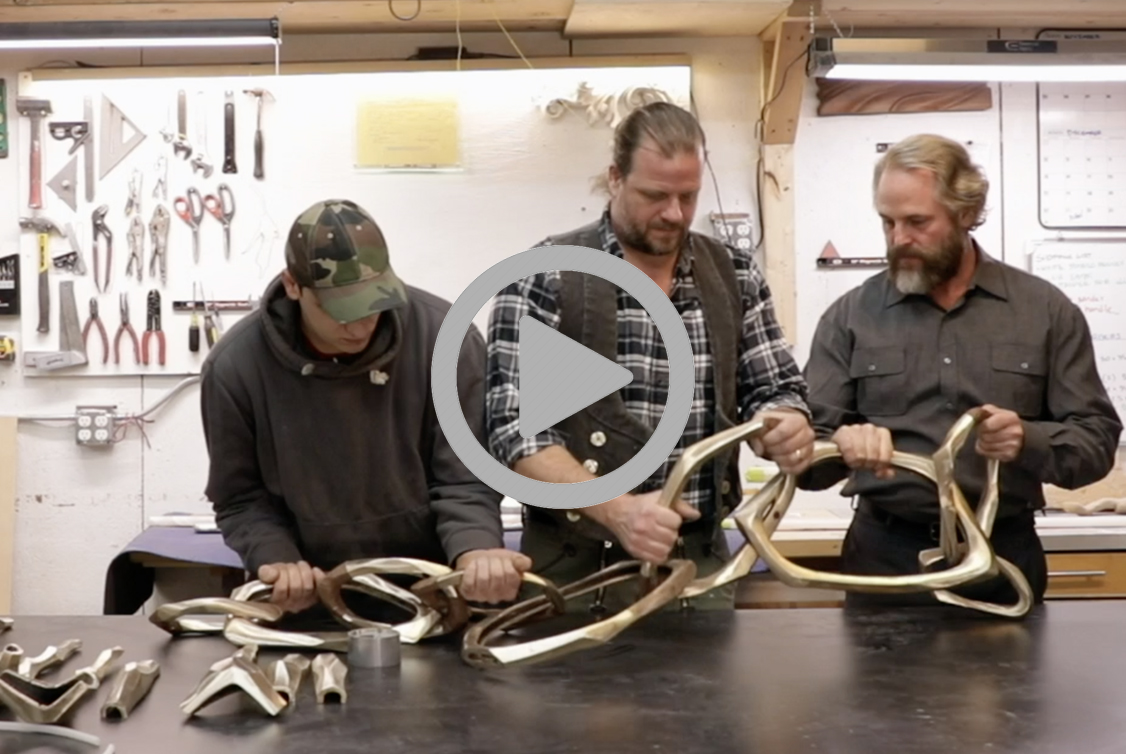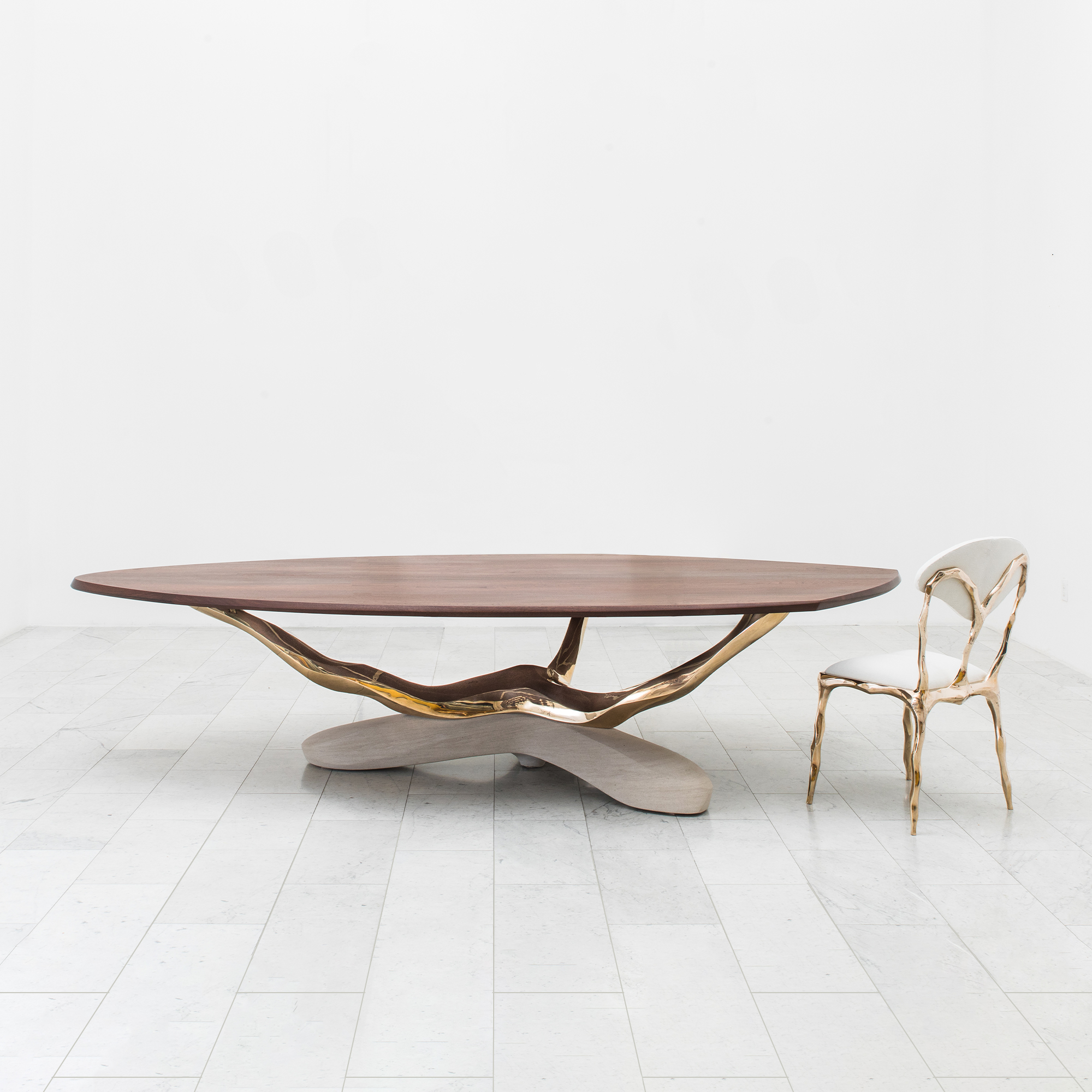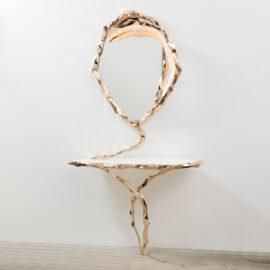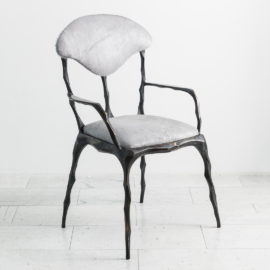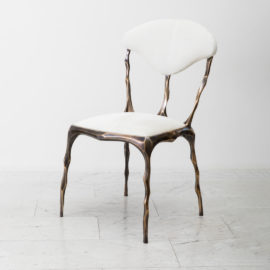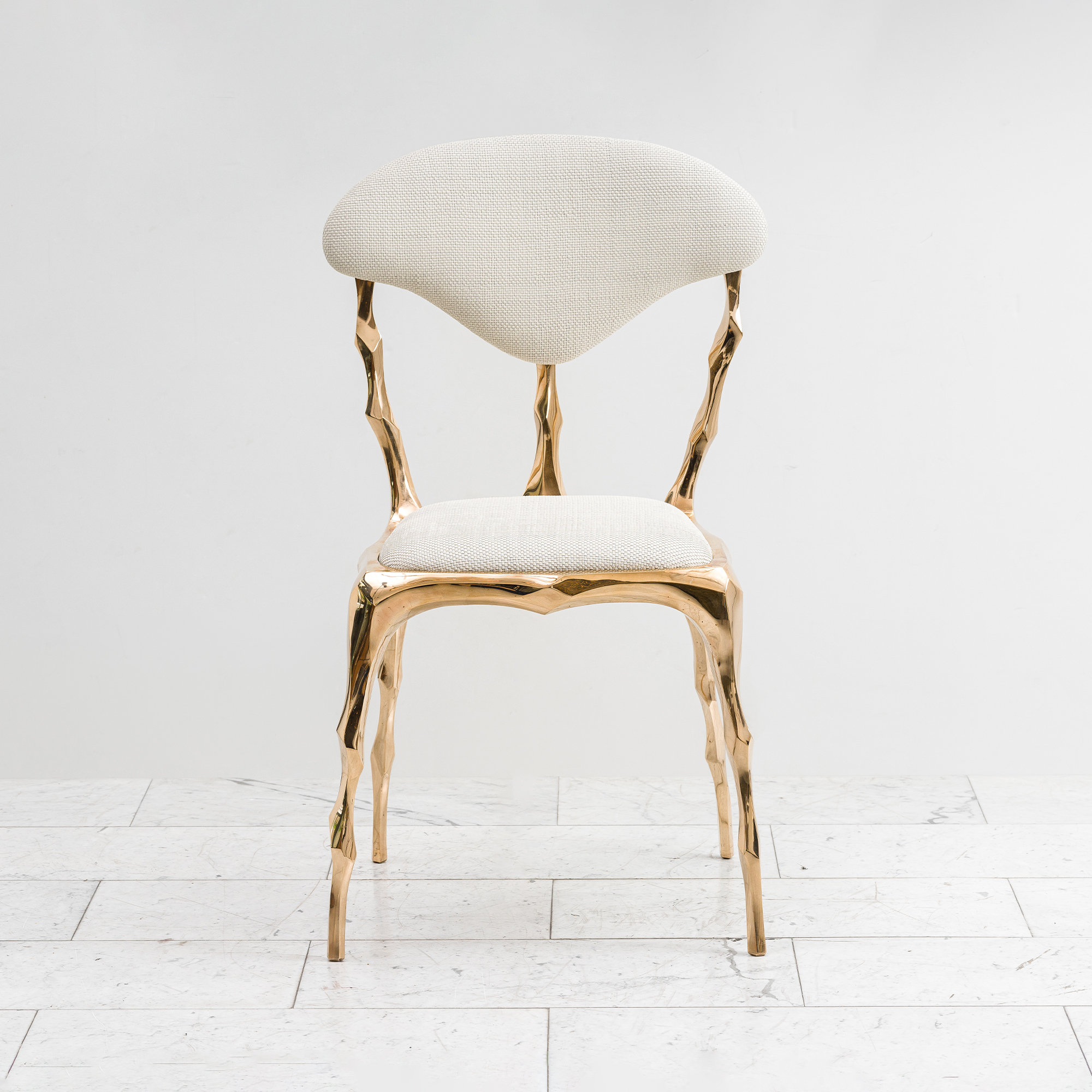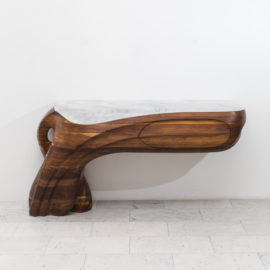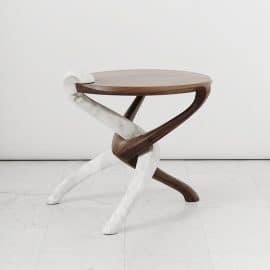

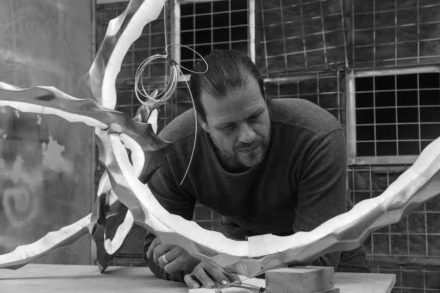

Todd Merrill Studio has represented Markus Haase since 2013. Influenced by classic and modern European sculptors, Haase masterfully combines several types of stone and wood into one composition, laminating the materials together and carving straight through them.
Haase immigrated to New York City from his native Germany bringing with him 20 years of experience as a sculptor. First drawn to the medium as an artistic outlet, his parents directed him towards a more practical trade education. He entered a master electrician program, which would last nearly eight years. During this time he apprenticed with a stone carver, learning the centuries old trade. His natural talent for sculpting allowed him to easily emulate architectural stone works found throughout Europe. Never fully entering the electrical trade, Haase went on to become a master stone carver, repairing some of the great cathedrals in central Europe while pursuing his own artistic output.
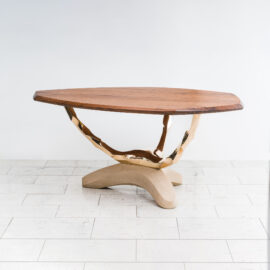
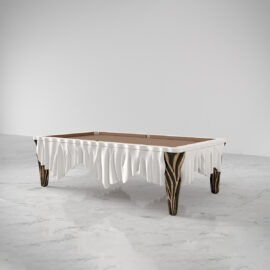
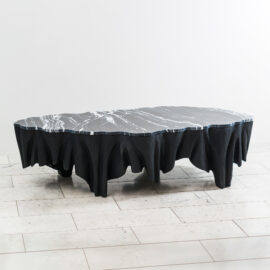
Haase’s work frequently echoes the human form or is drawn from nature, with consistent hallmarks such the Crossover Table, the Bang Series, the Aeolian Tables, and most recently the Sculptural Lighting series, and the Circlet Series of cast bronze lighting. Bold in design and handcrafted by the artist, each work is tailored to its client.
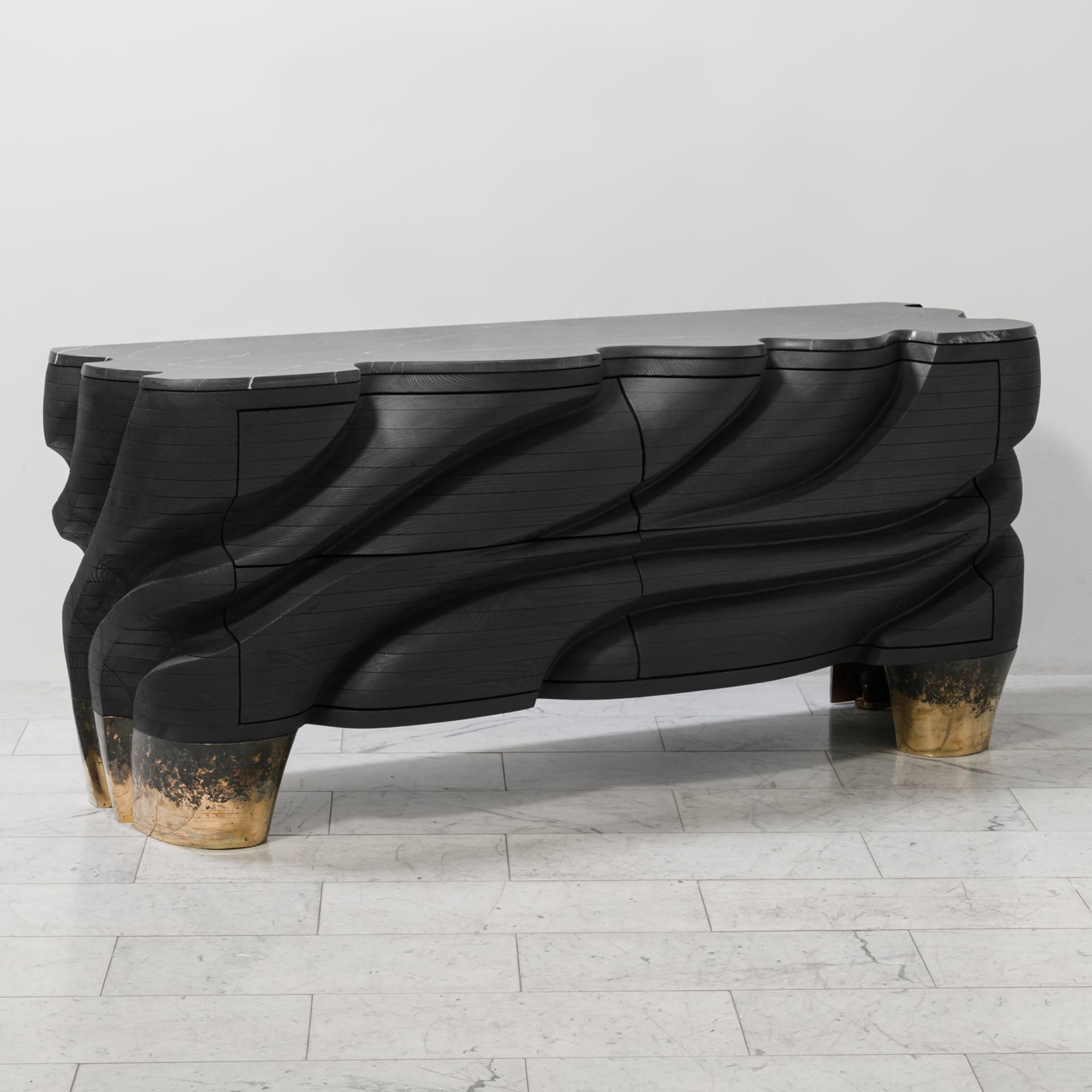
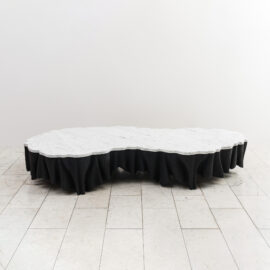
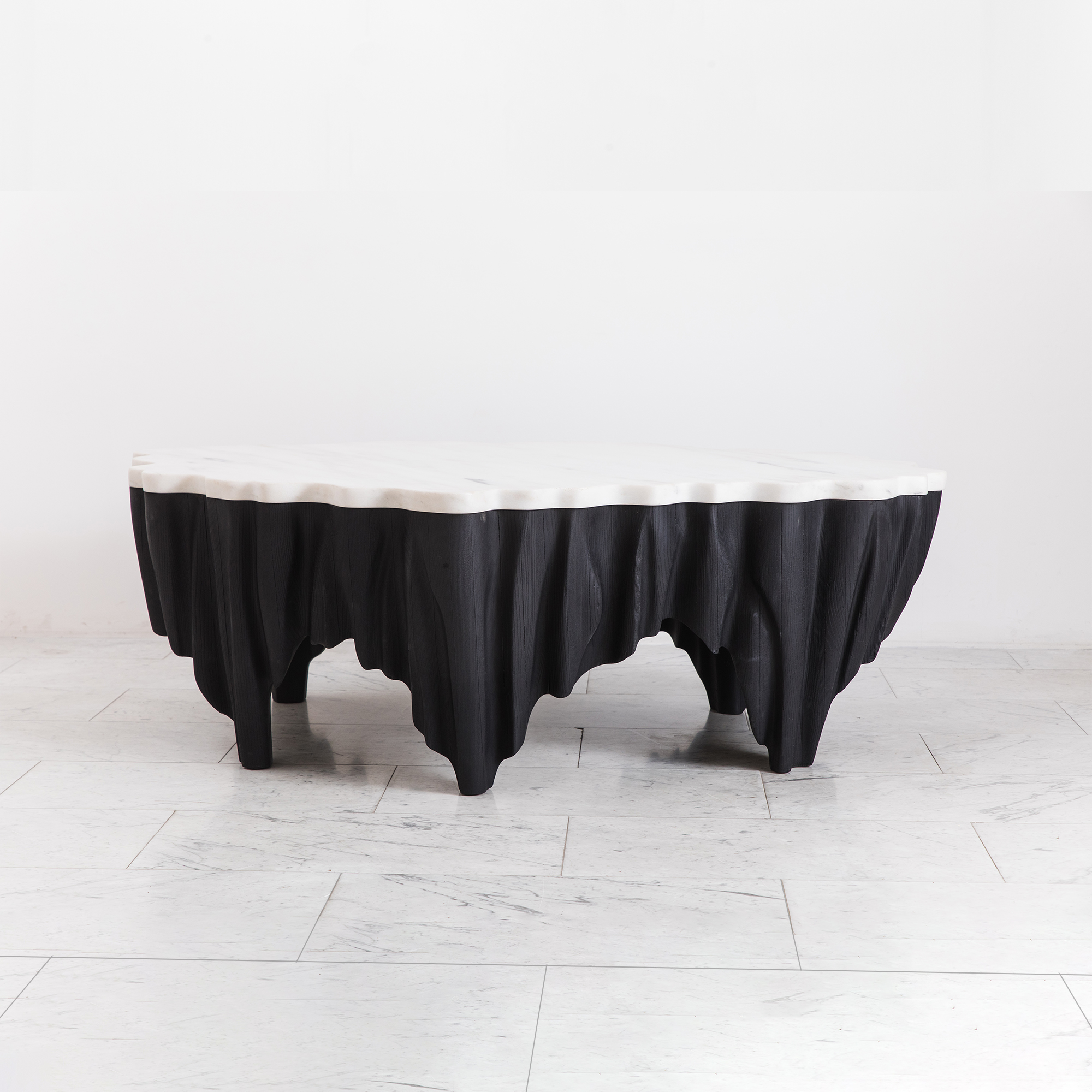
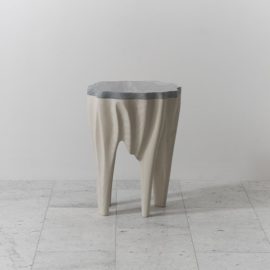
The Aeolian series is inspired by ripples in windblown sand, epitomizing the sculptor’s distinct approach to fluid carving in both wood and stone, where smooth undulations of bleached ash and white marble appear as malleable as drapery.
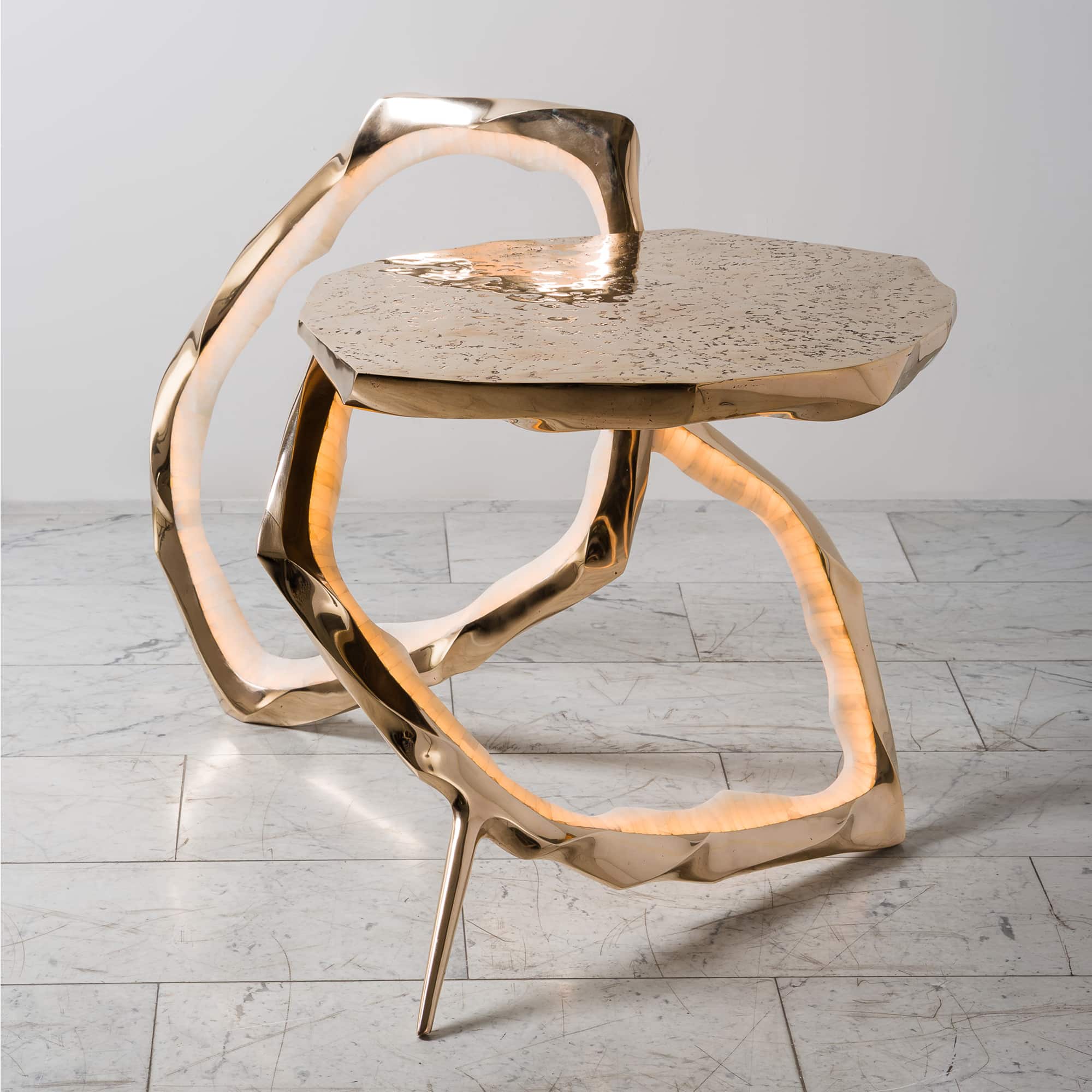
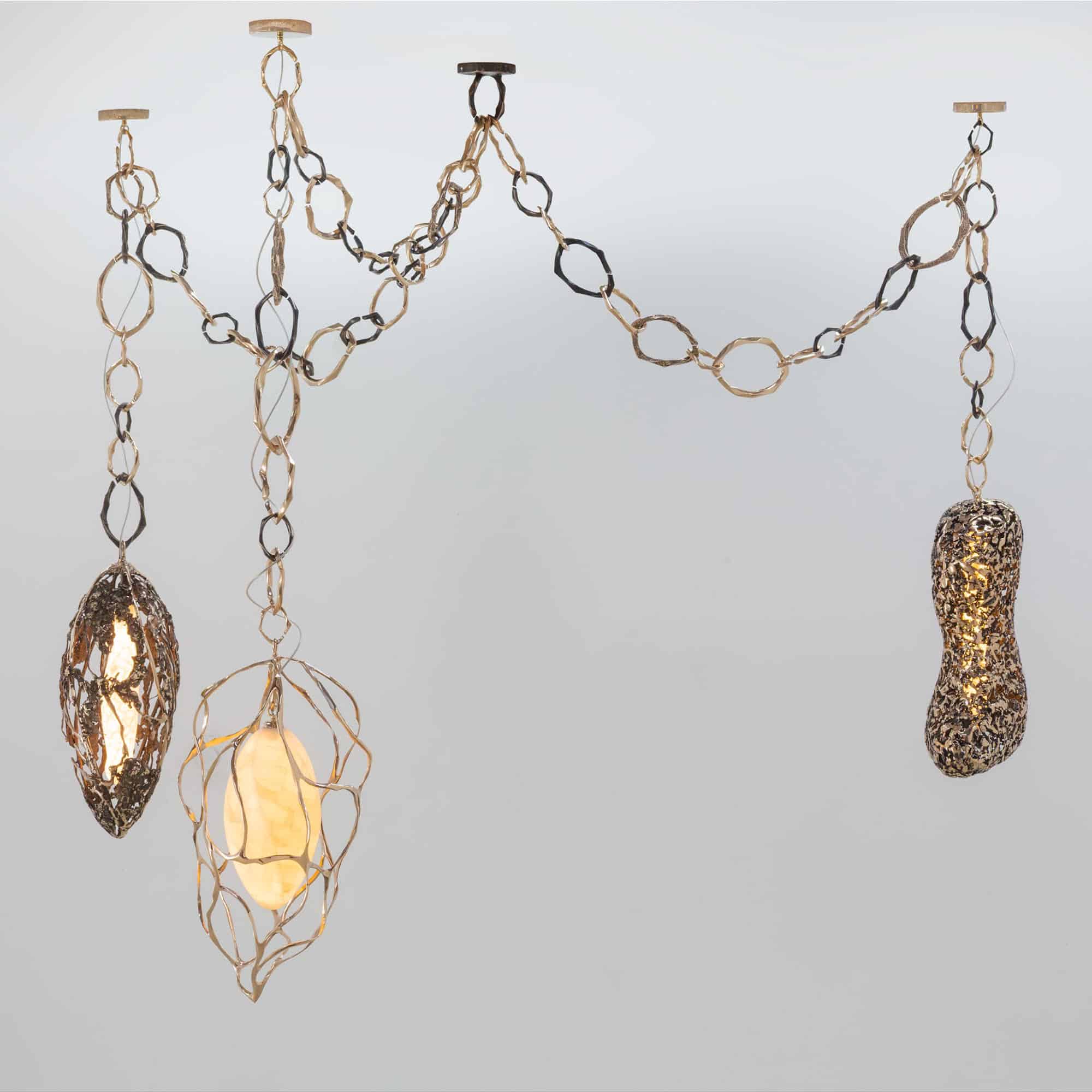
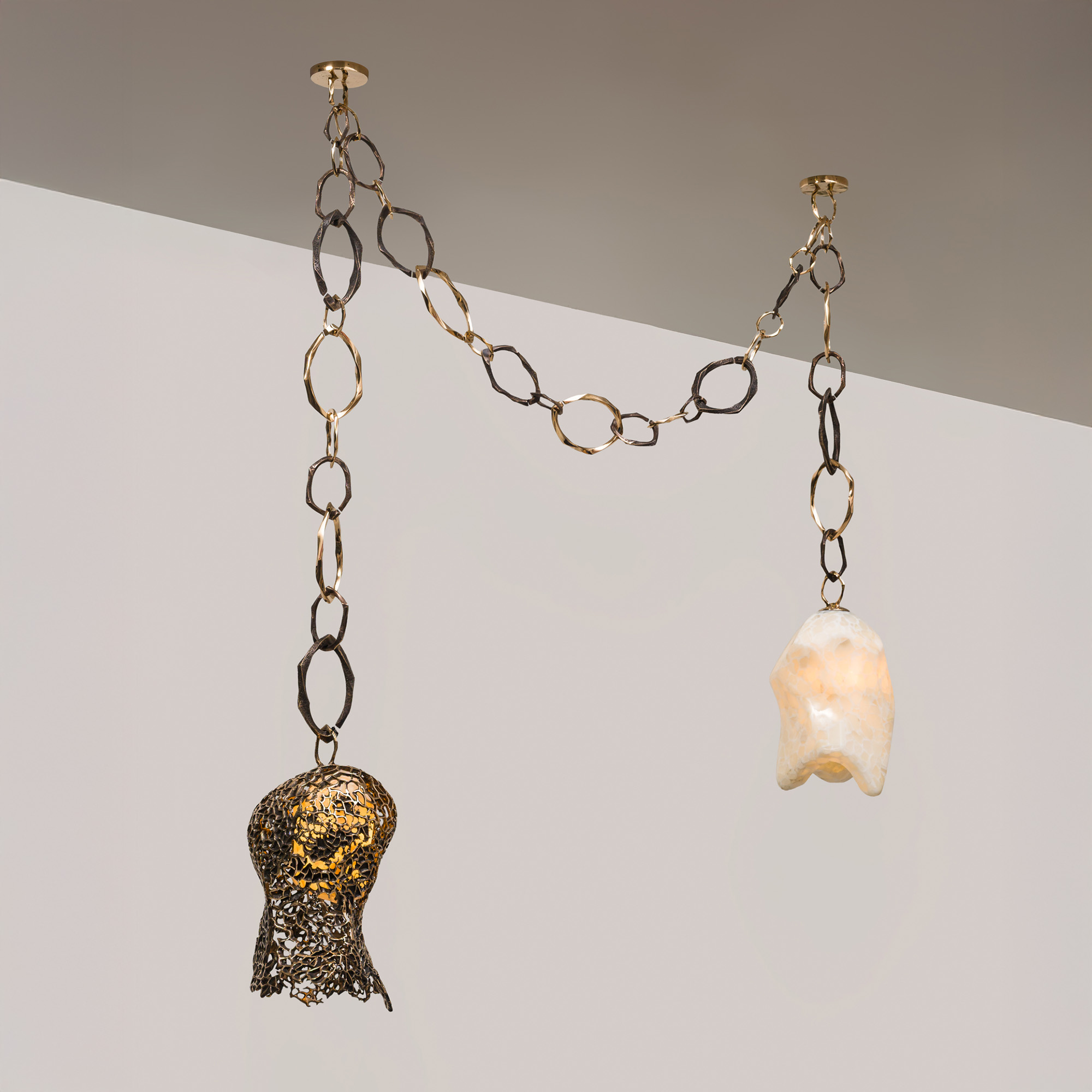
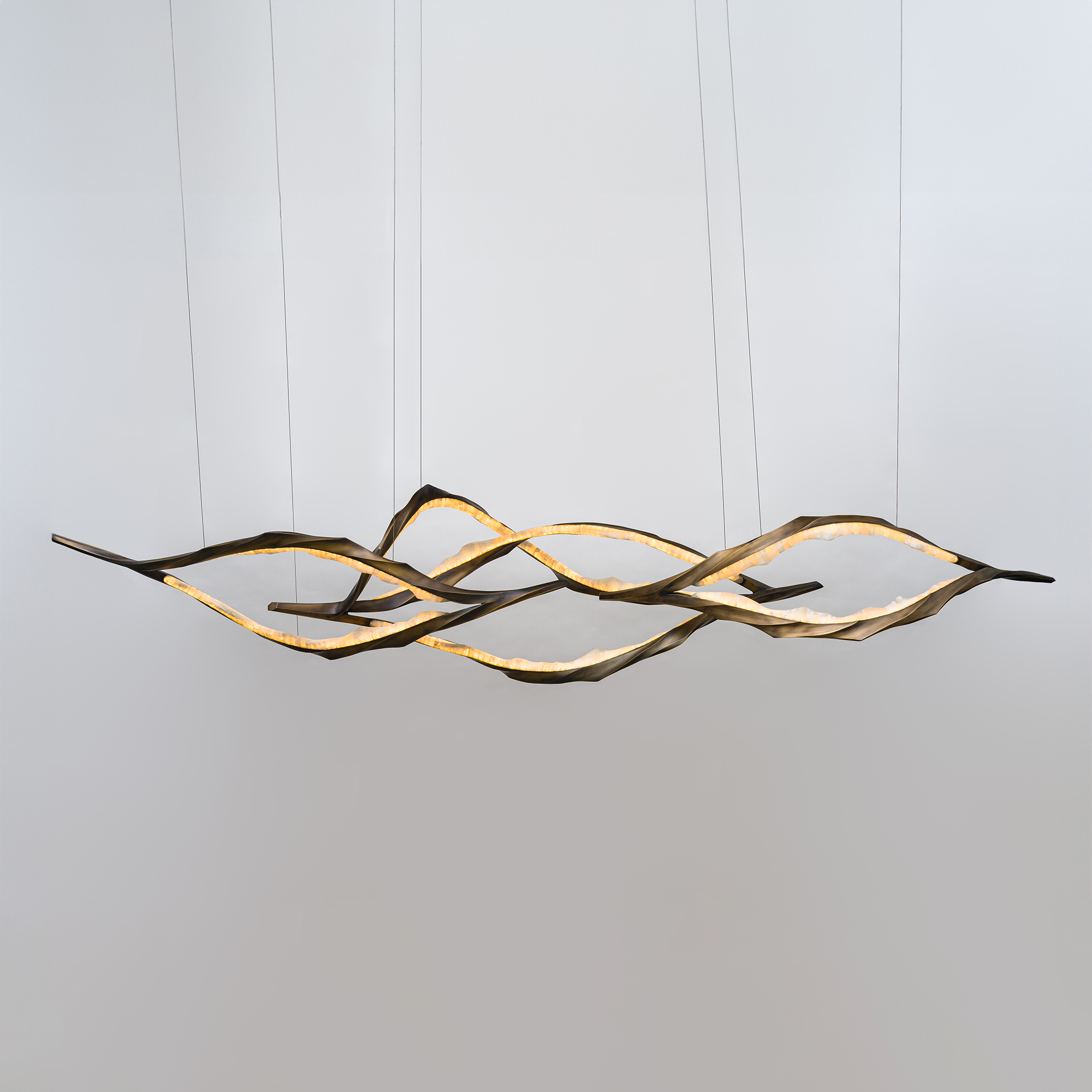
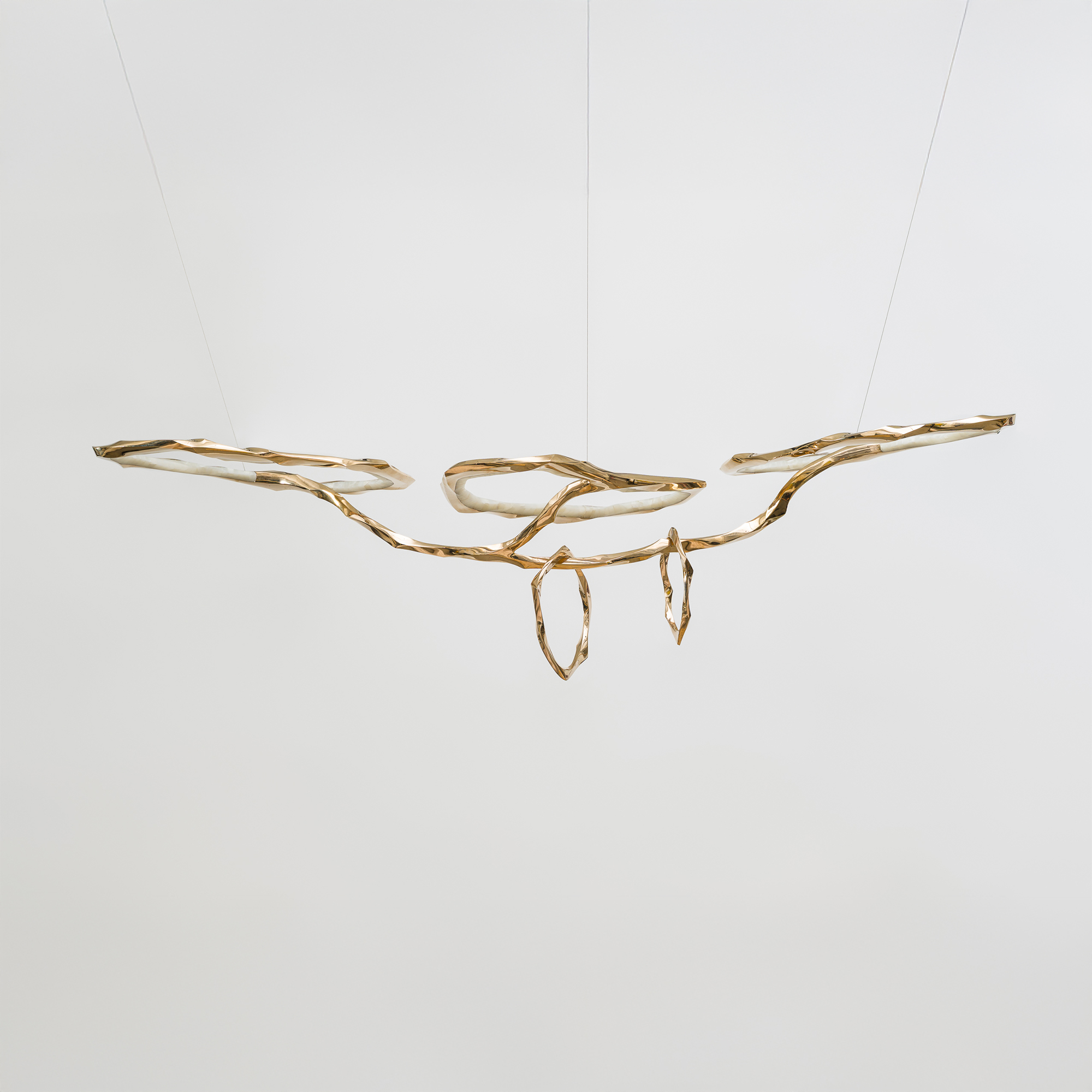
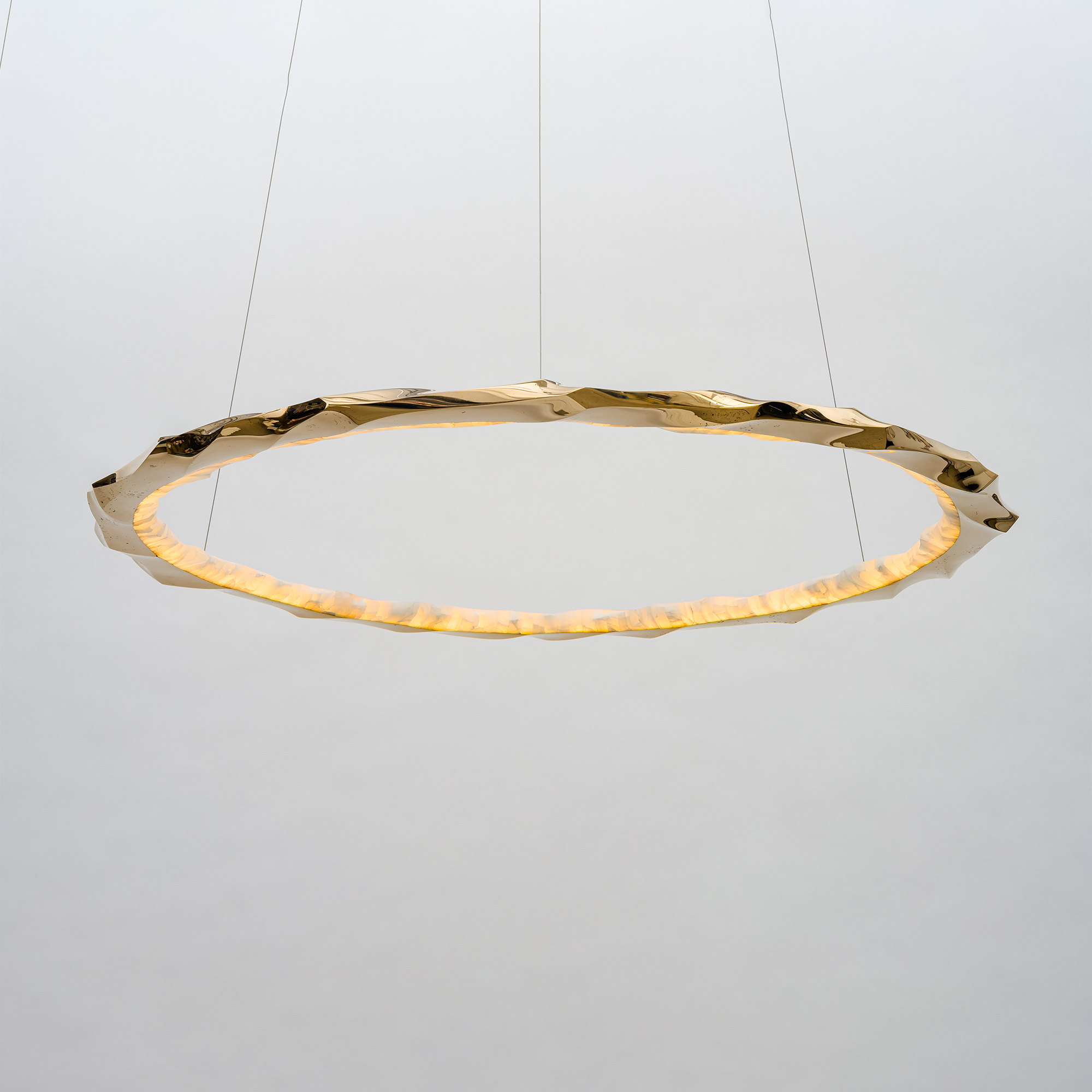
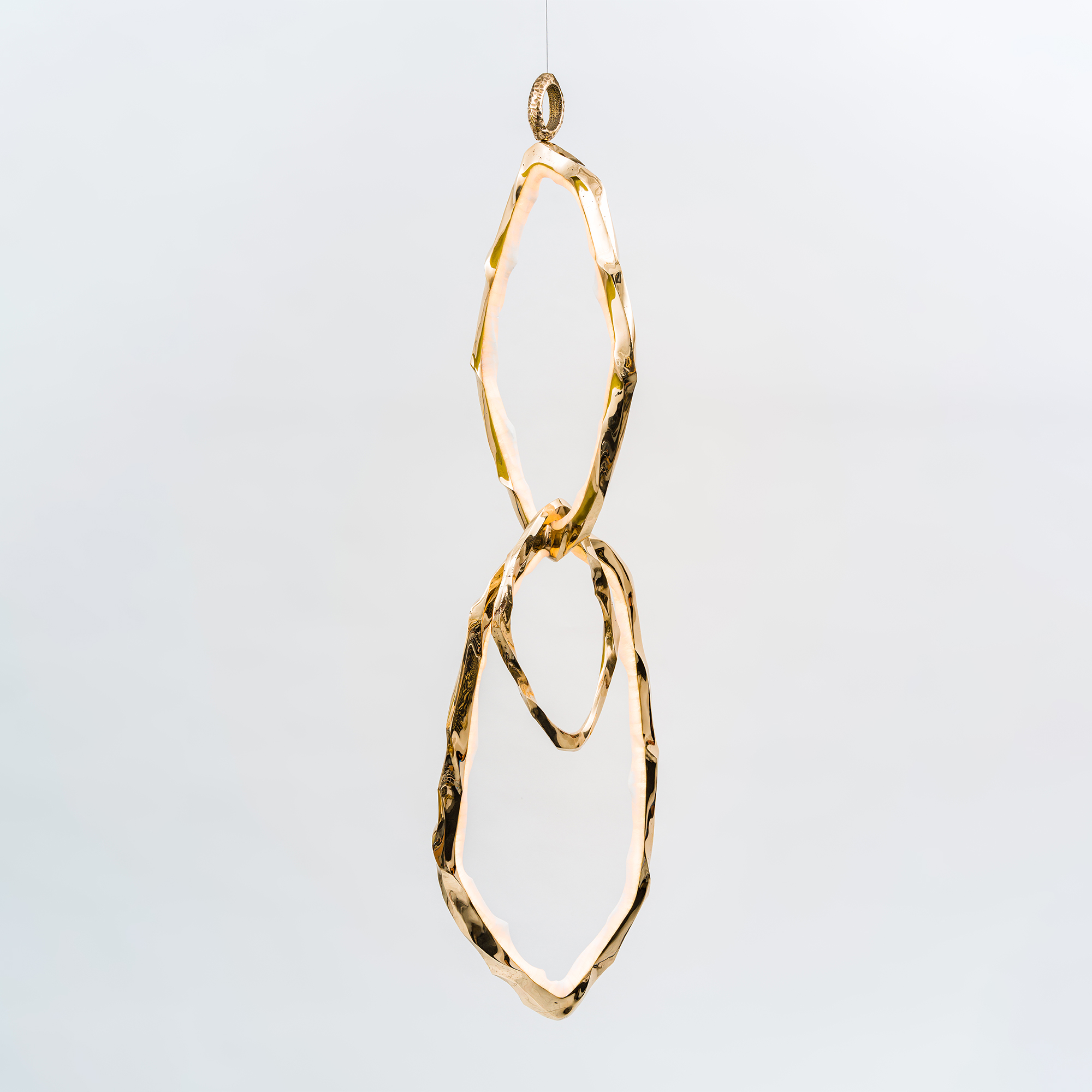
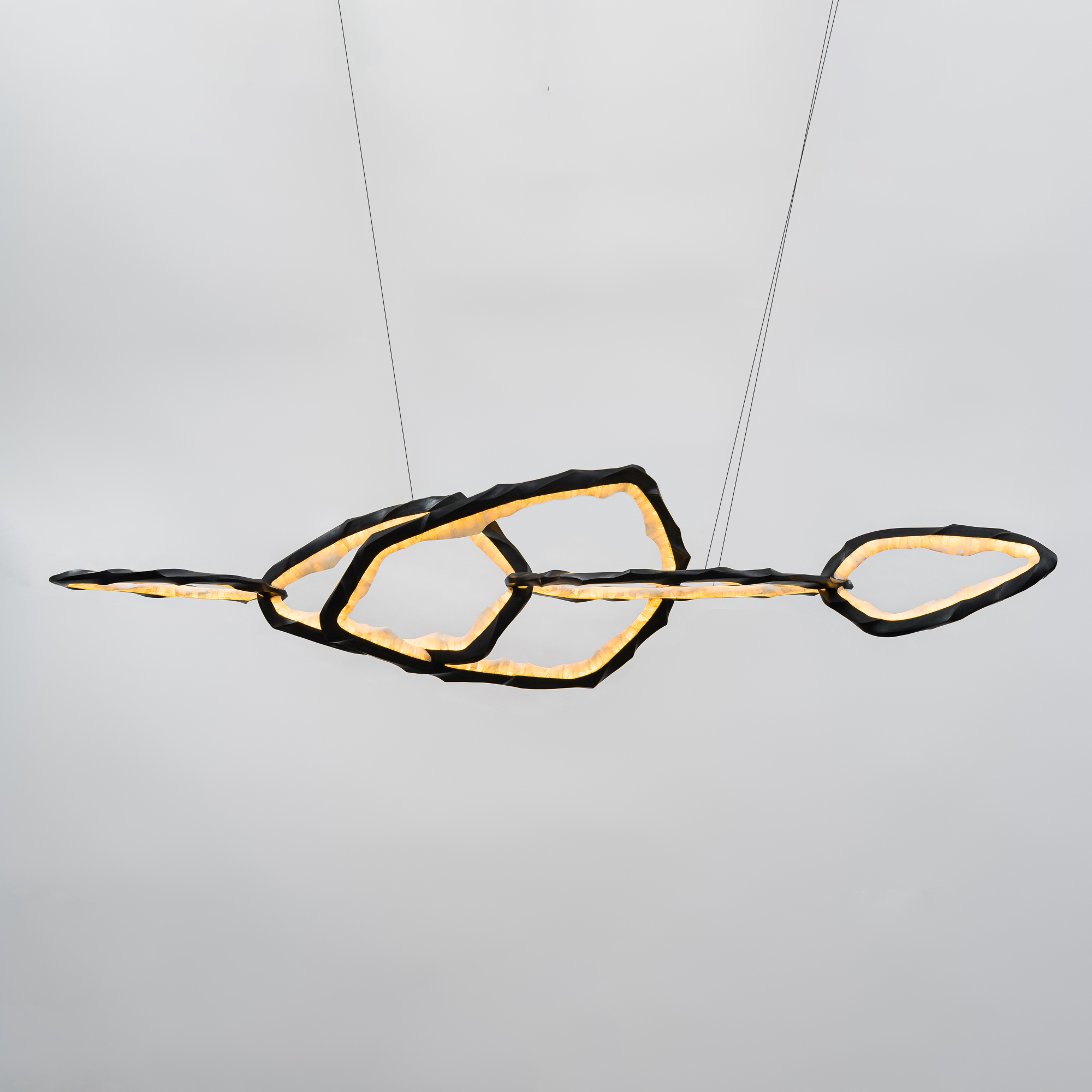
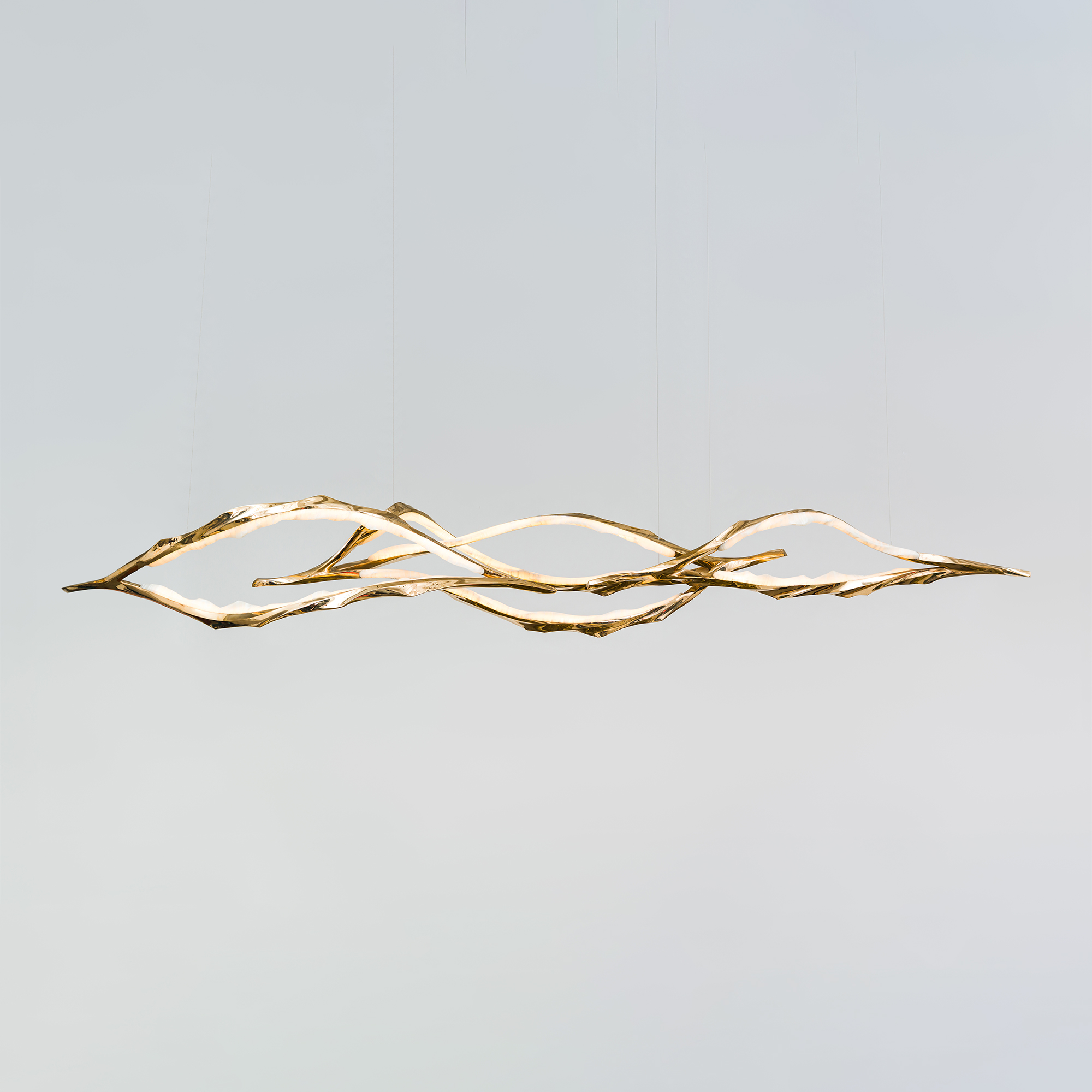
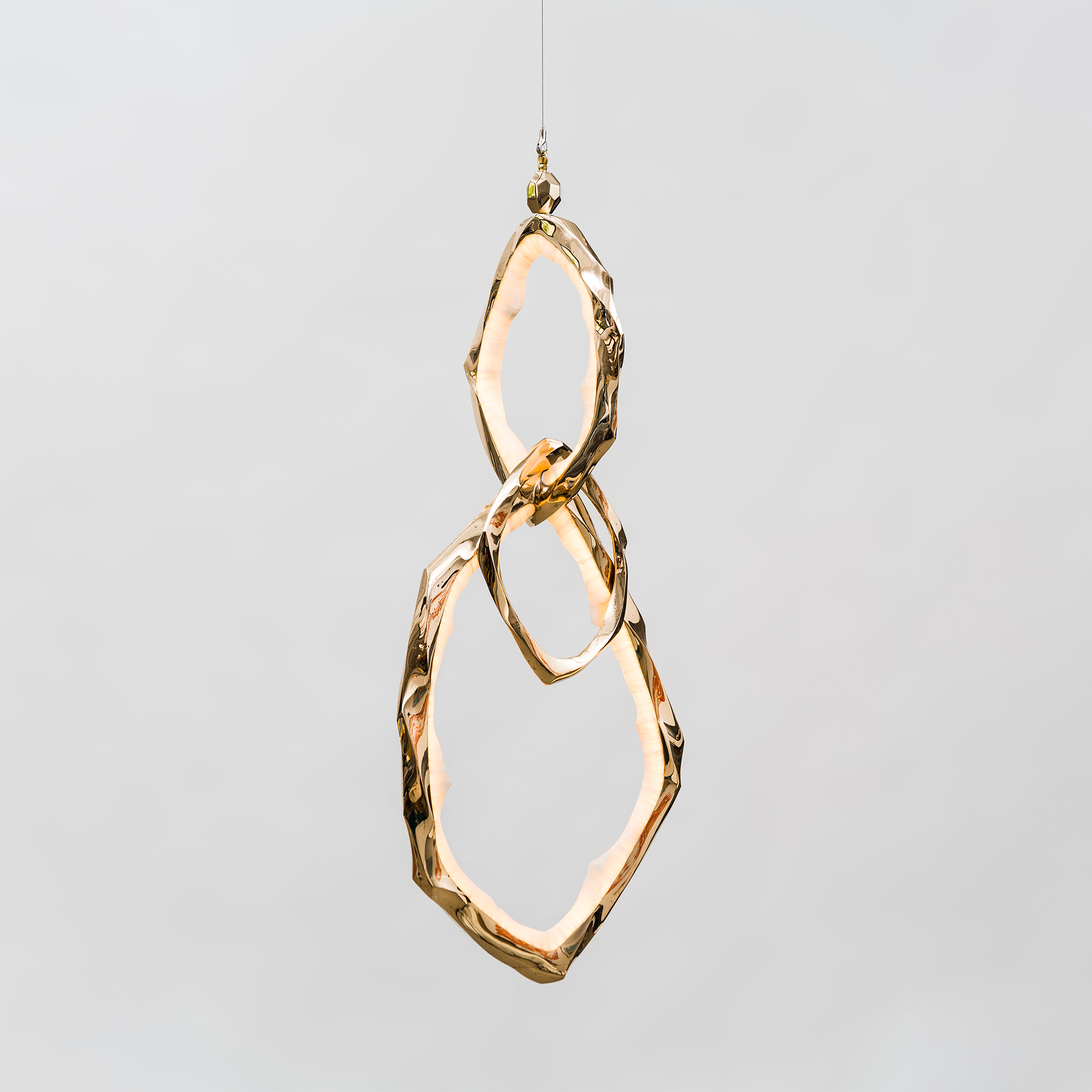
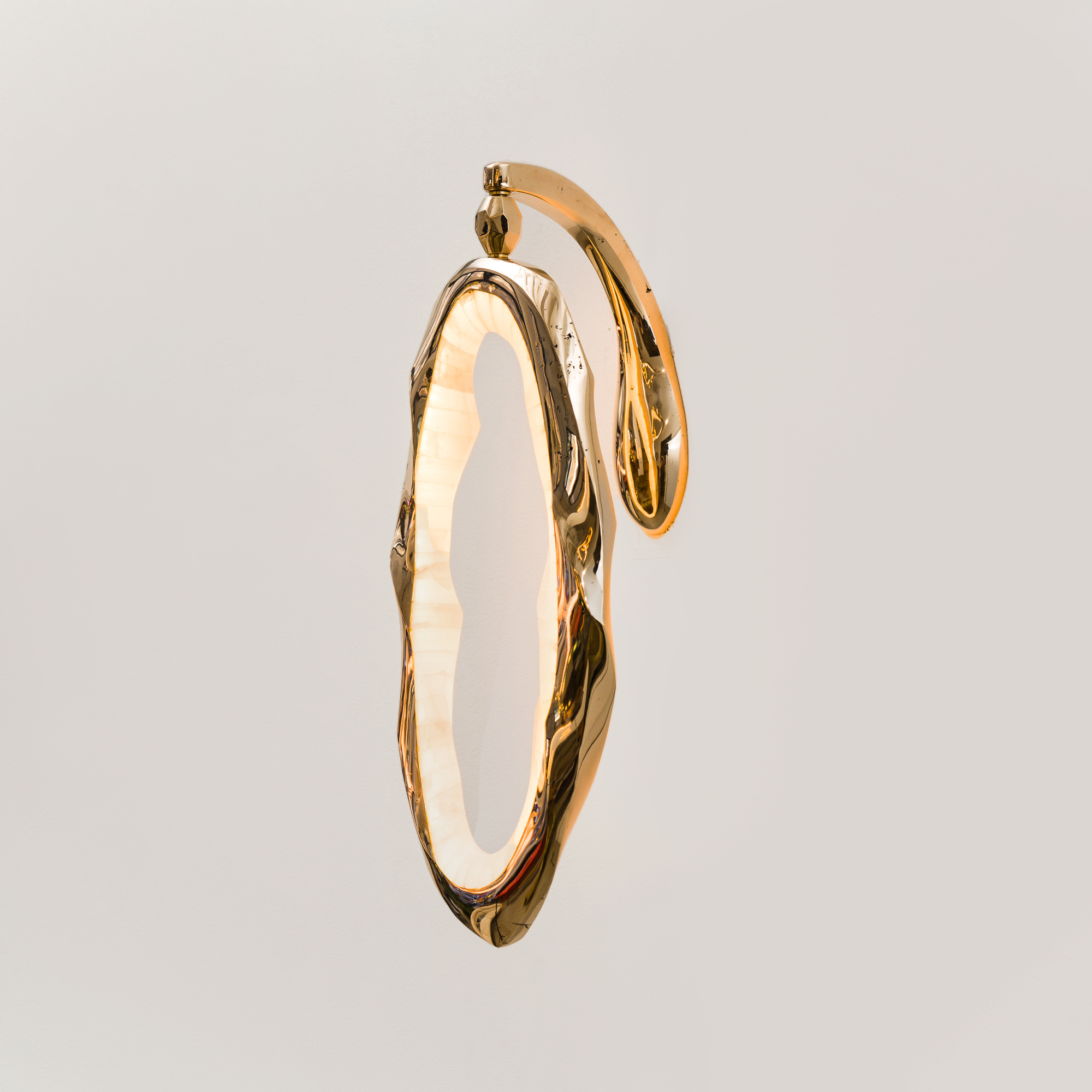
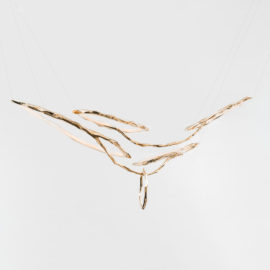
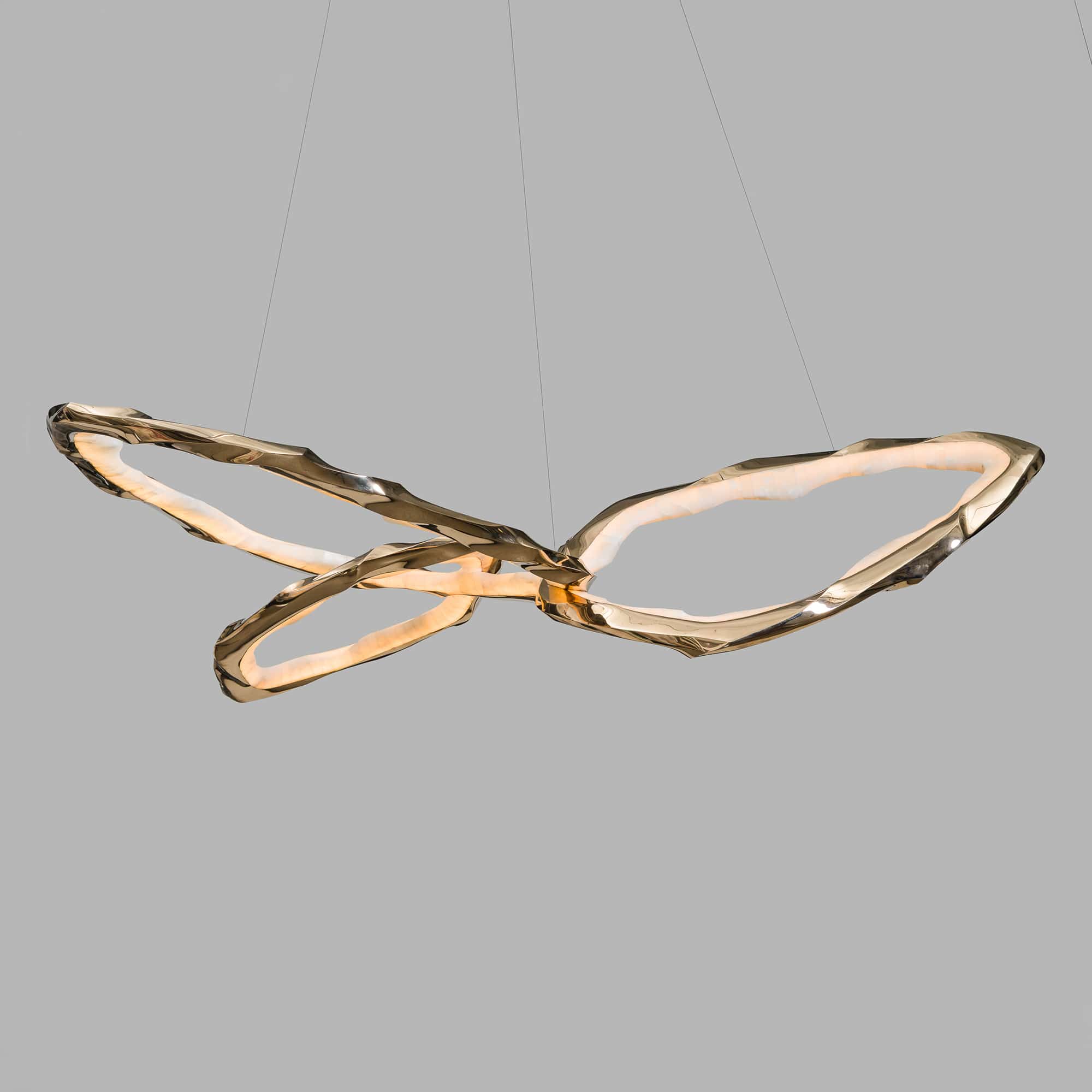
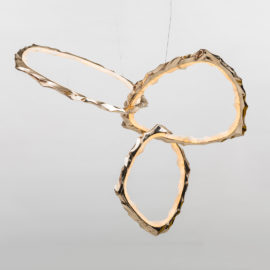
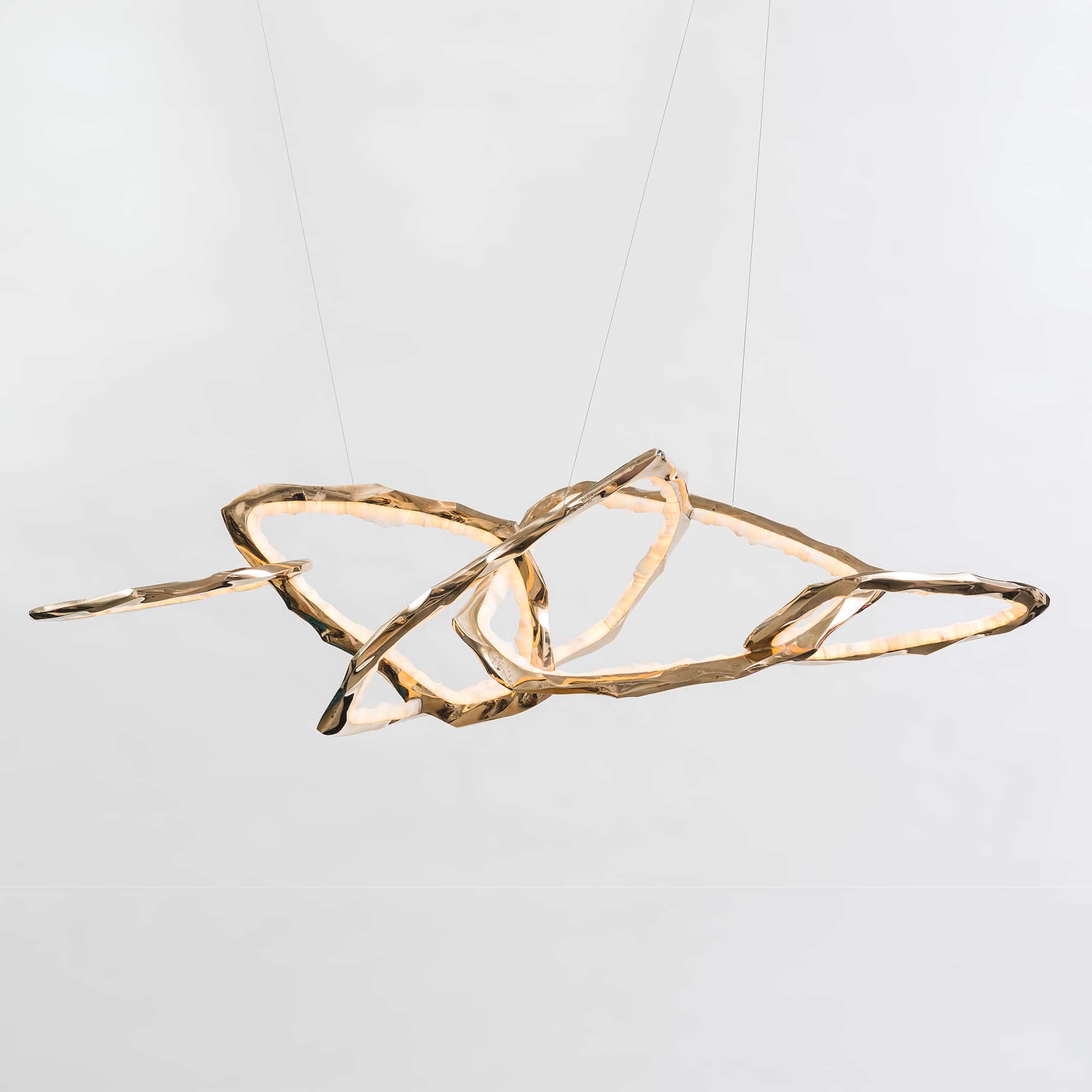
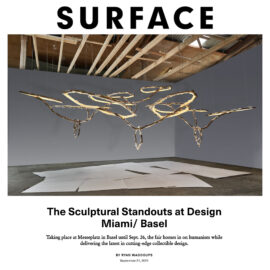
Haase’s Cloud, Circlet, and Catena Series each utilize fresh and innovative design techniques, incorporating sensuous forms, highlighting the purity of form and materials. Across these three series, Hasse employs individually cast bronze and hand-carved onyx rings, creating works that appear fluid and weightless. Circlet interconnects the shaped rings to form a sweeping landscape of radiant light. Cloud reinterprets the same shaped rings as tiered, overlapping, and interlocking forms to create gestural, atmospheric works that appear as columns of smoke or billowing thunderheads. The Catena Series, meaning “chain” in Italian, uses the circular grammar to form sculptural bronze chain links that carry pendants of hand-cast bronze webbing using the ancient technique of spelt casting and individually cut, glowing white onyx. More than a structural element, the chain serves as a sculptural gesture in its own right, expressing movement and rhythm throughout the work.
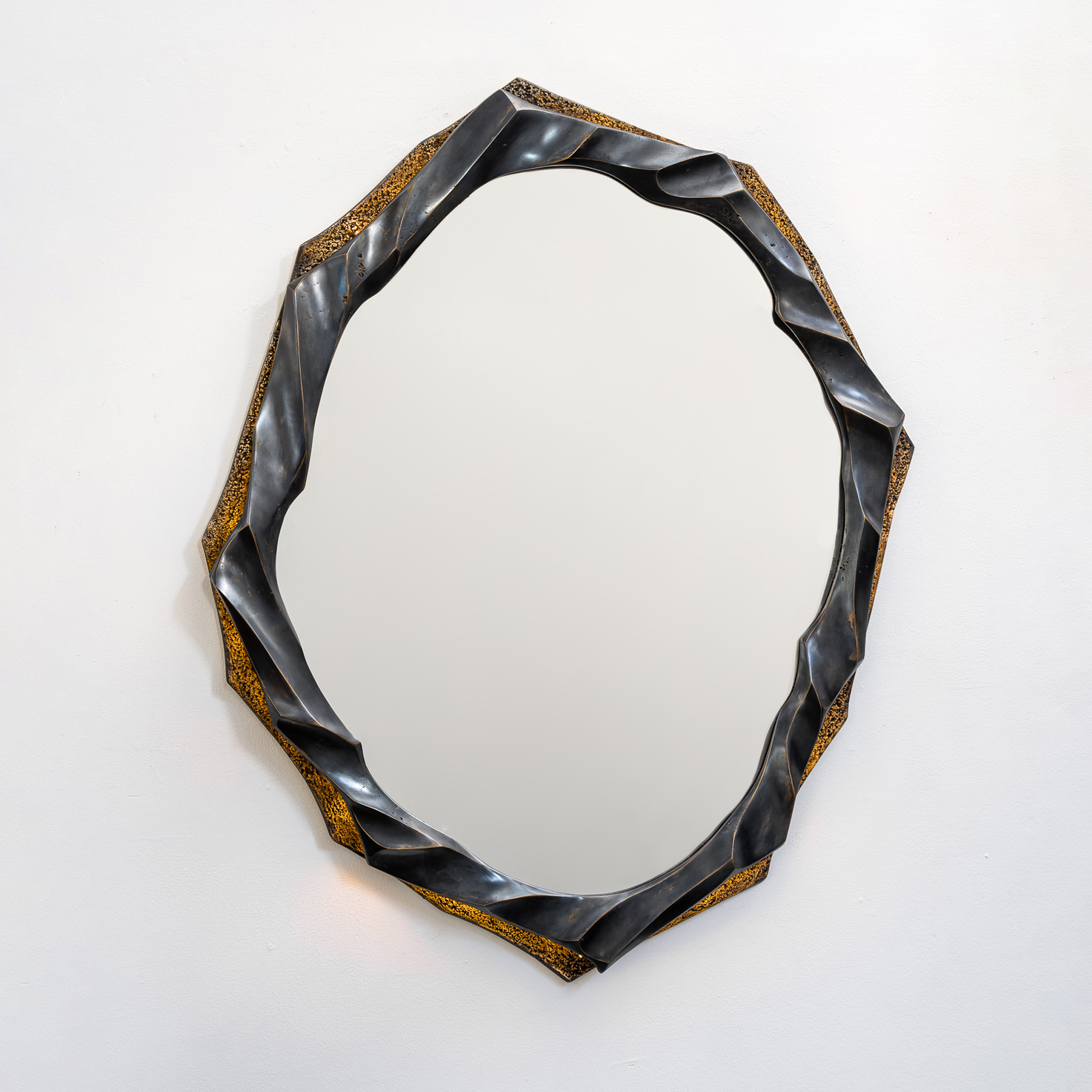
Across Hasse’s work, each component is first hand-carved as a foam model to be cast in bronze using the “lost mould” method—a technique that destroys the original, so every piece is absolutely one-of-a-kind. In a gesture that reflects both sustainability and artistic ingenuity, Haase utilizes reclaimed bronze fragments and onyx remnants collected from previous studio projects, giving new life to the materials. These disparate elements are meticulously reconstructed into sculptural forms that celebrate the inherent beauty of imperfection, history, and transformation.
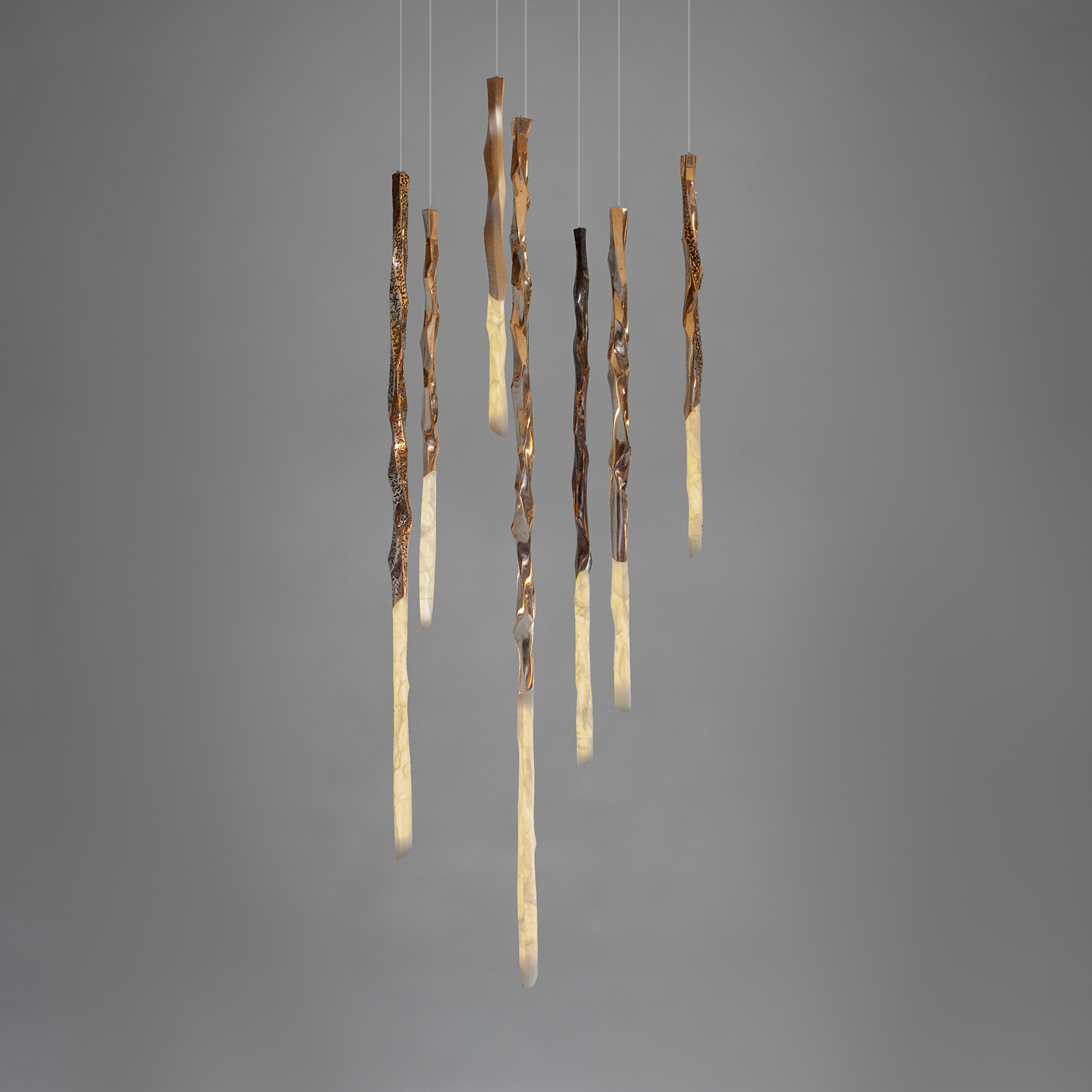
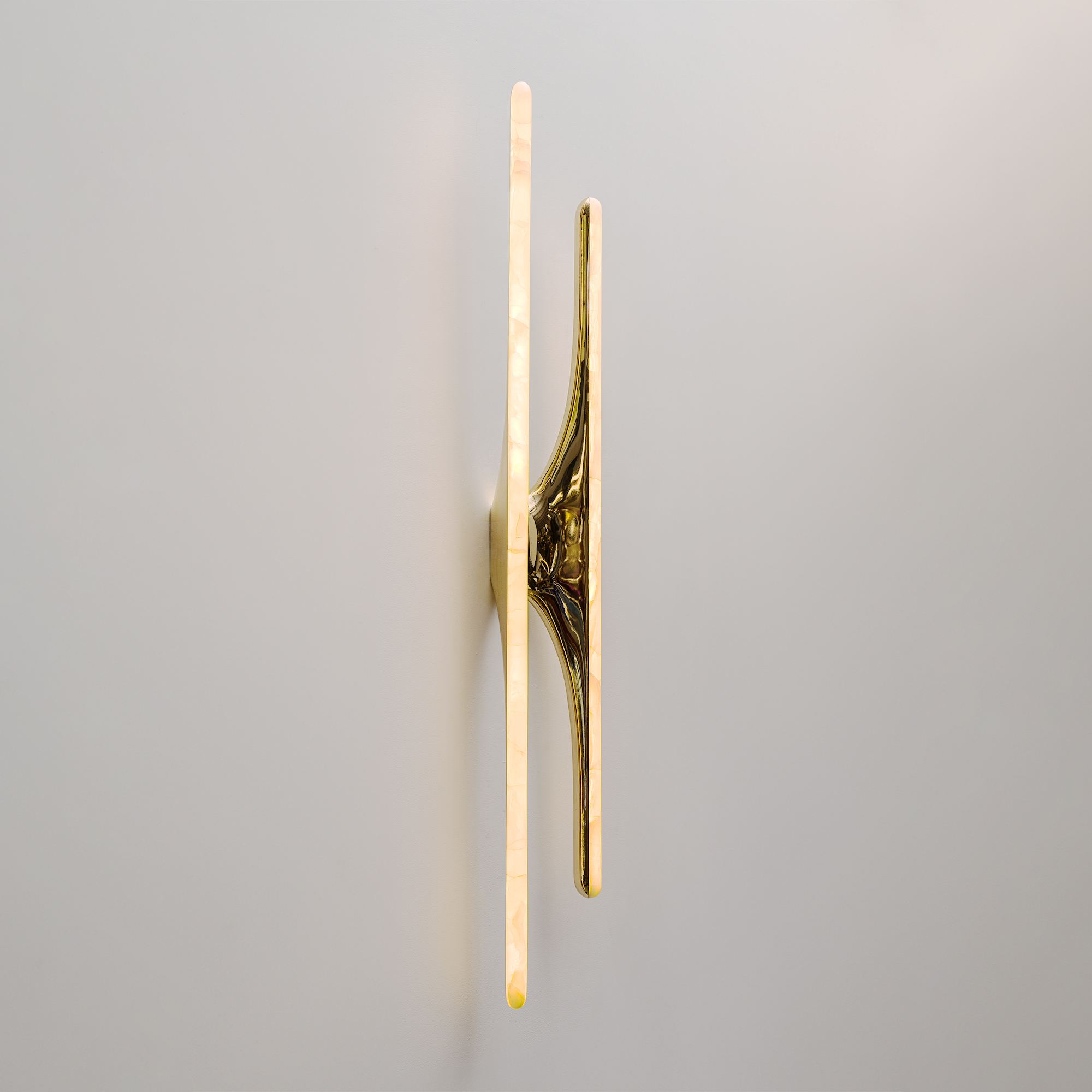
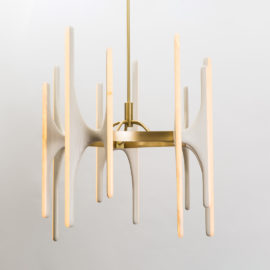
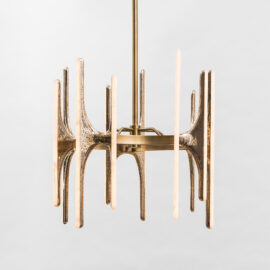
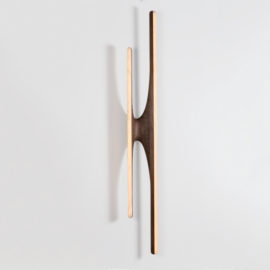
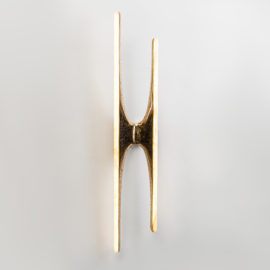
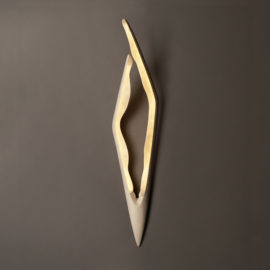
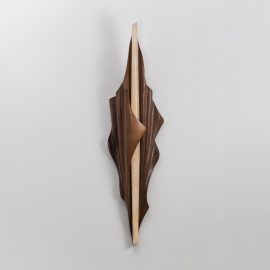
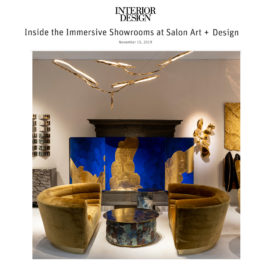
In 2015 Haase began incorporating his electrical expertise into new designs. By embracing advancements in LED lighting and using these in congress with hand-carved onyx, alabaster, wood, and bronze, Haase is producing lighting that has no equivalent in the market. This series of sculptural pendants and sconces continues to evolve with Haase’s ever changing output.
Haase’s extraordinary craftsmanship across metal, stone, and wood distinguishes his practice; in addition to carving and casting, he is formally trained in classical sculpture. Haase’s practice embodies the independent artisan. Each piece bears the distinct mark of the maker’s hand. Rather than using the material casting as a mechanism for producing multiples, each of Haase’s bronze and onyx light sculptures is completely singular. Precious stone, onyx or alabaster is hand-carved and set in bronze like jewelry, diffusing the internal LEDs. He is not making a piece of furniture that looks like art. He is a sculptor making art that serves functional ends.