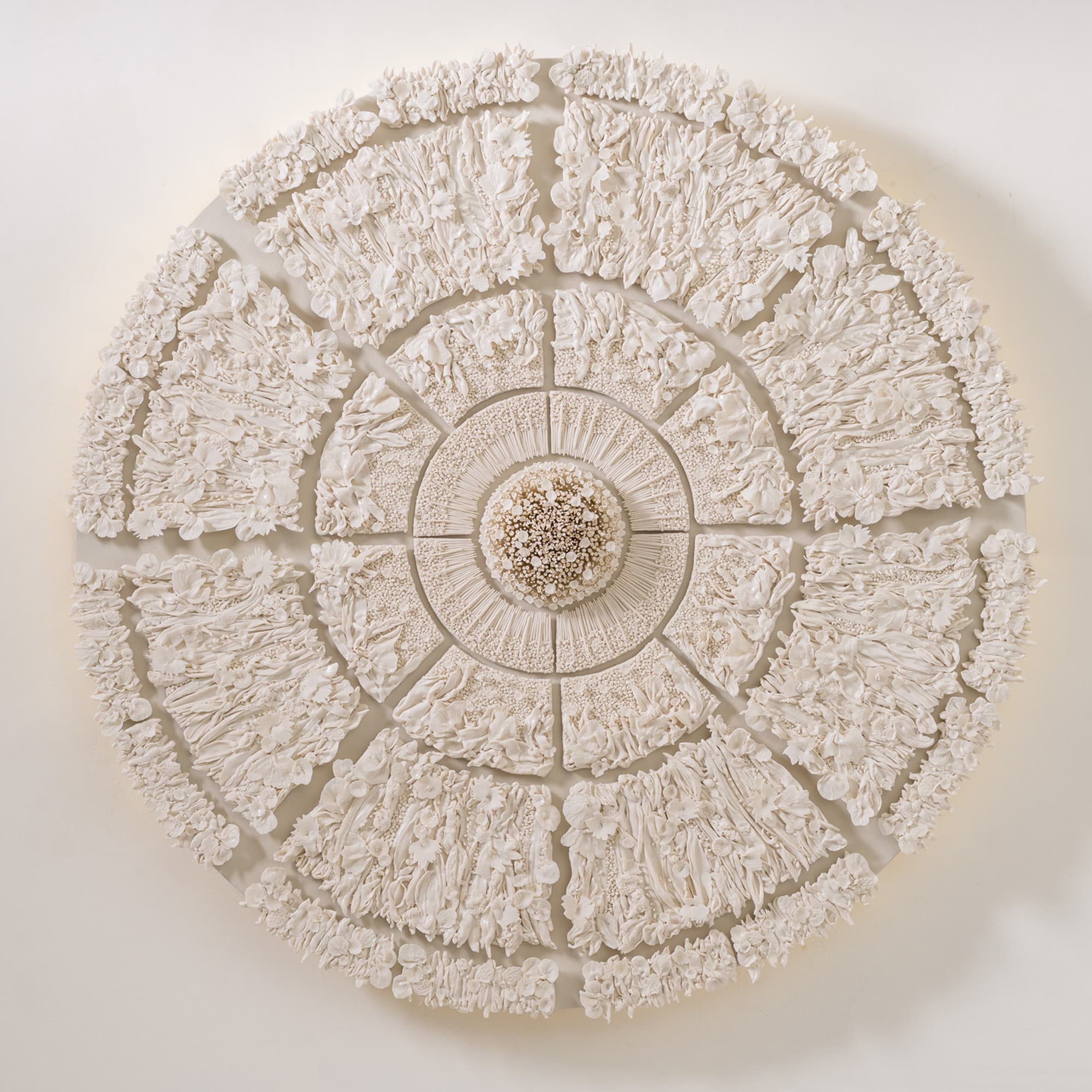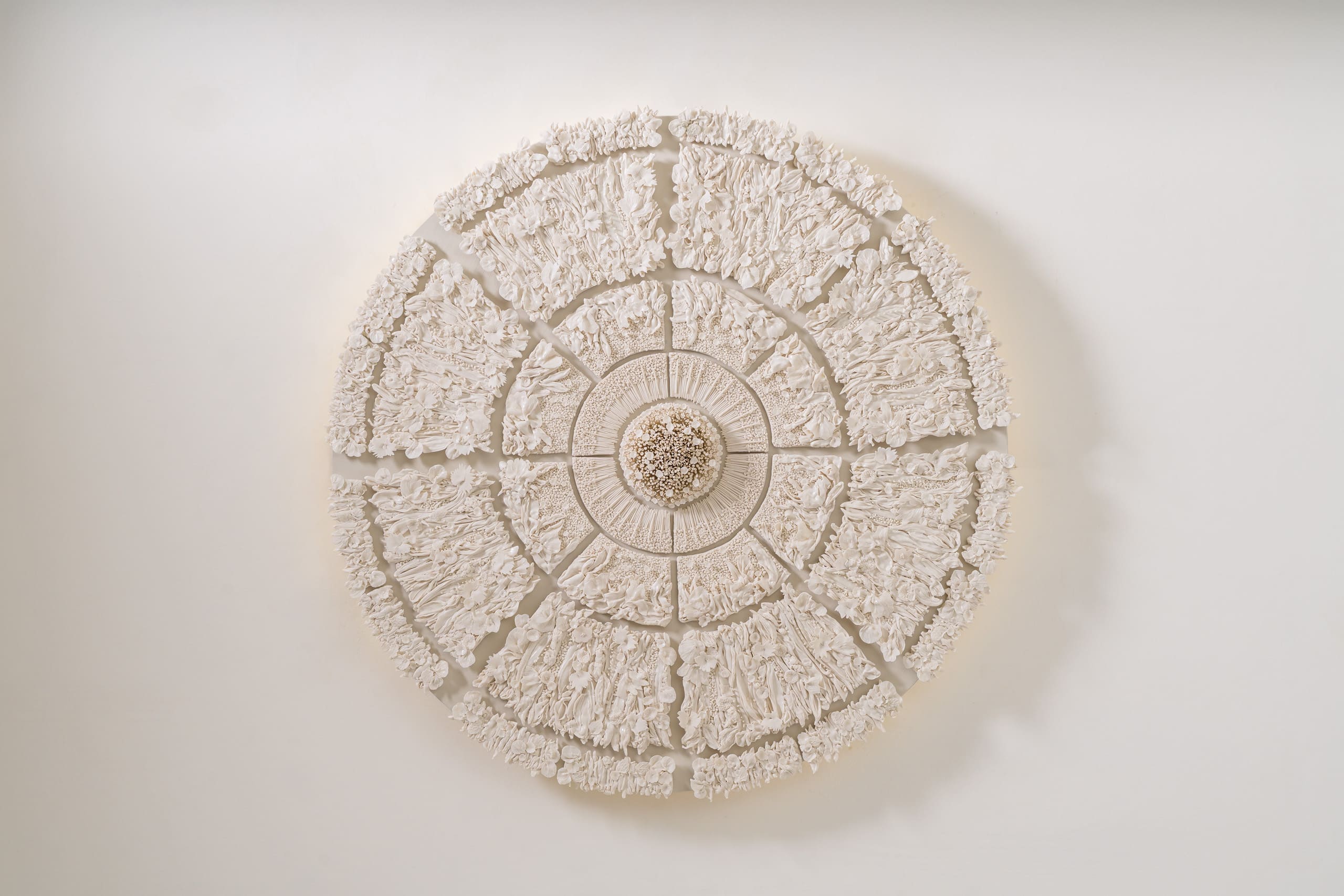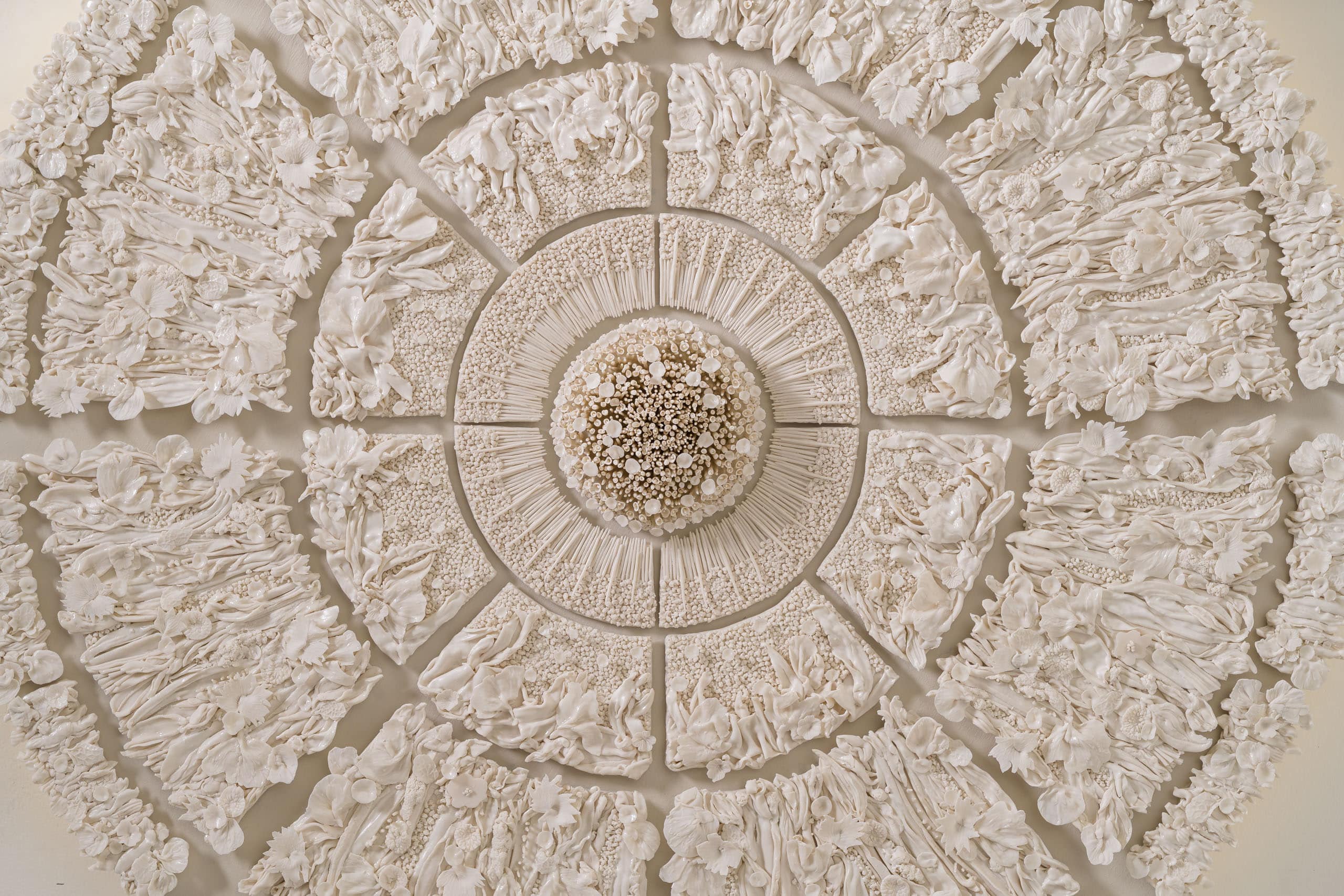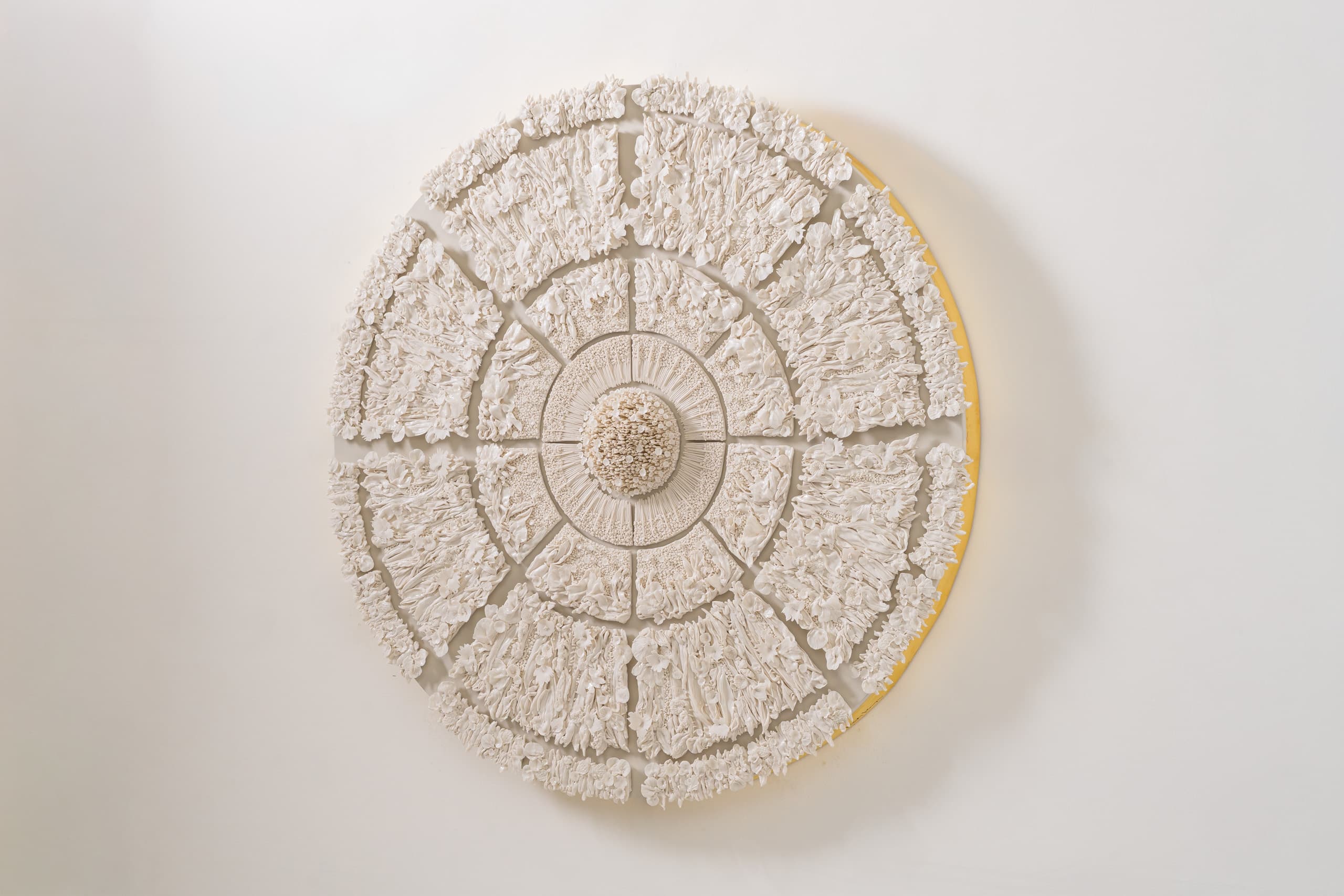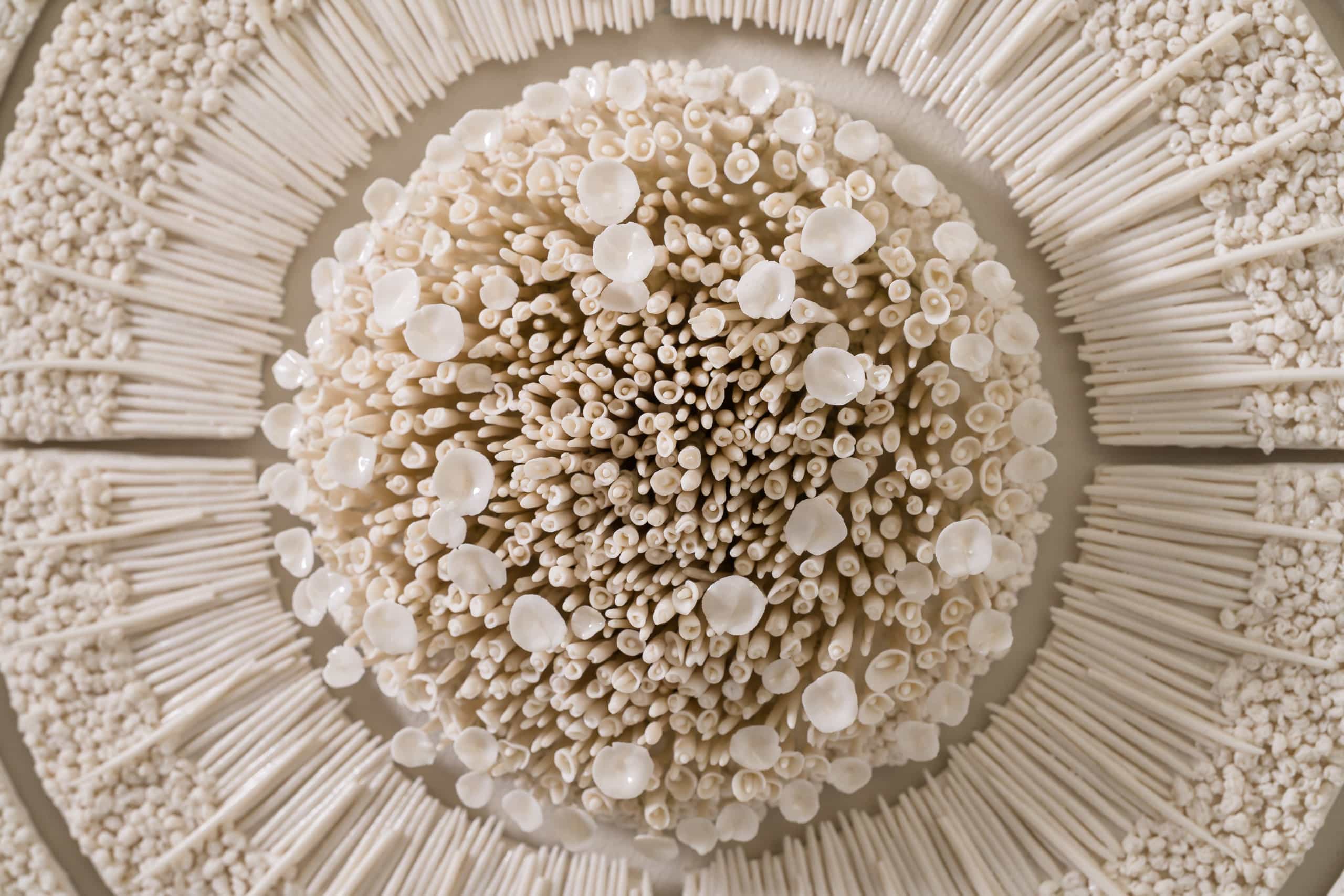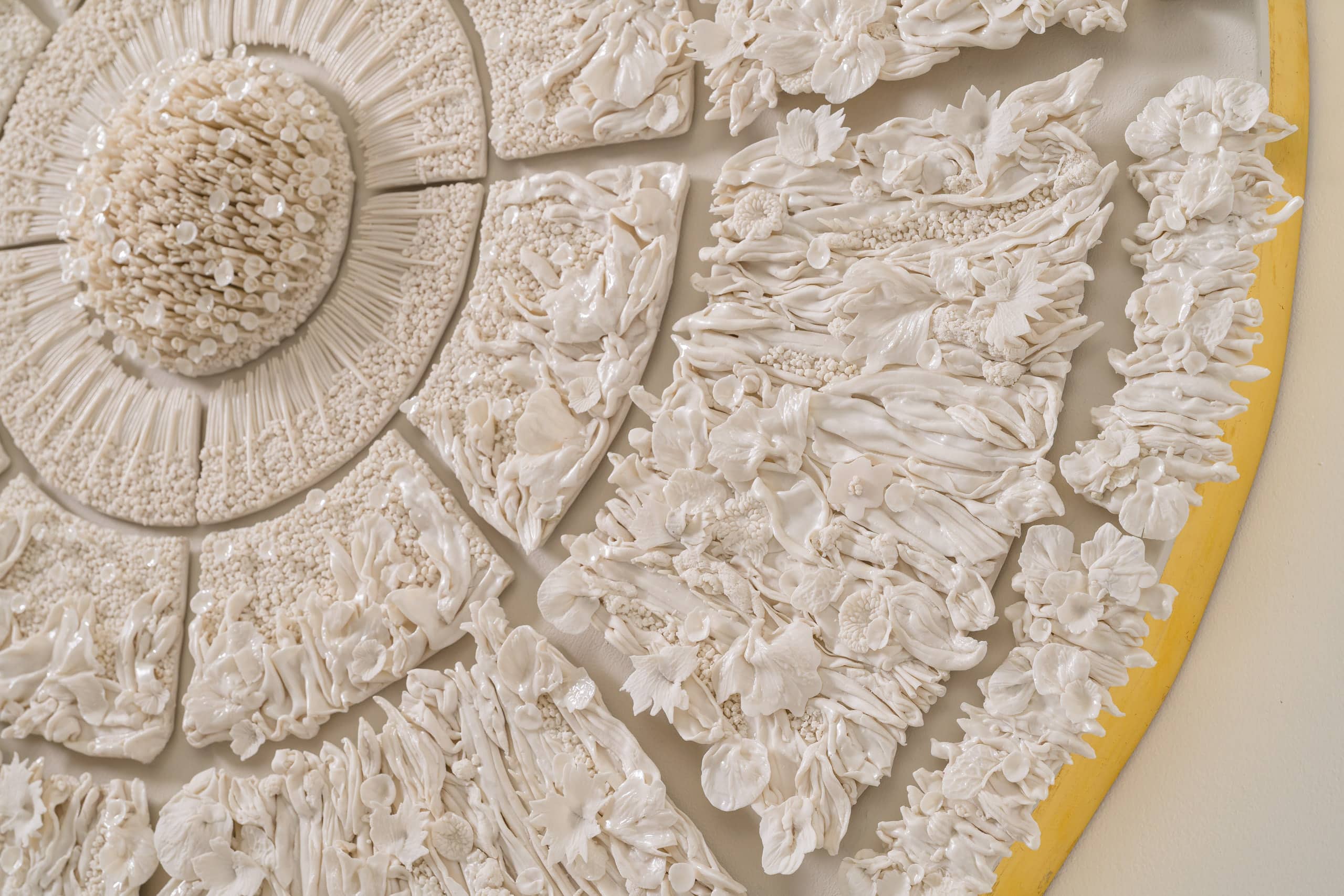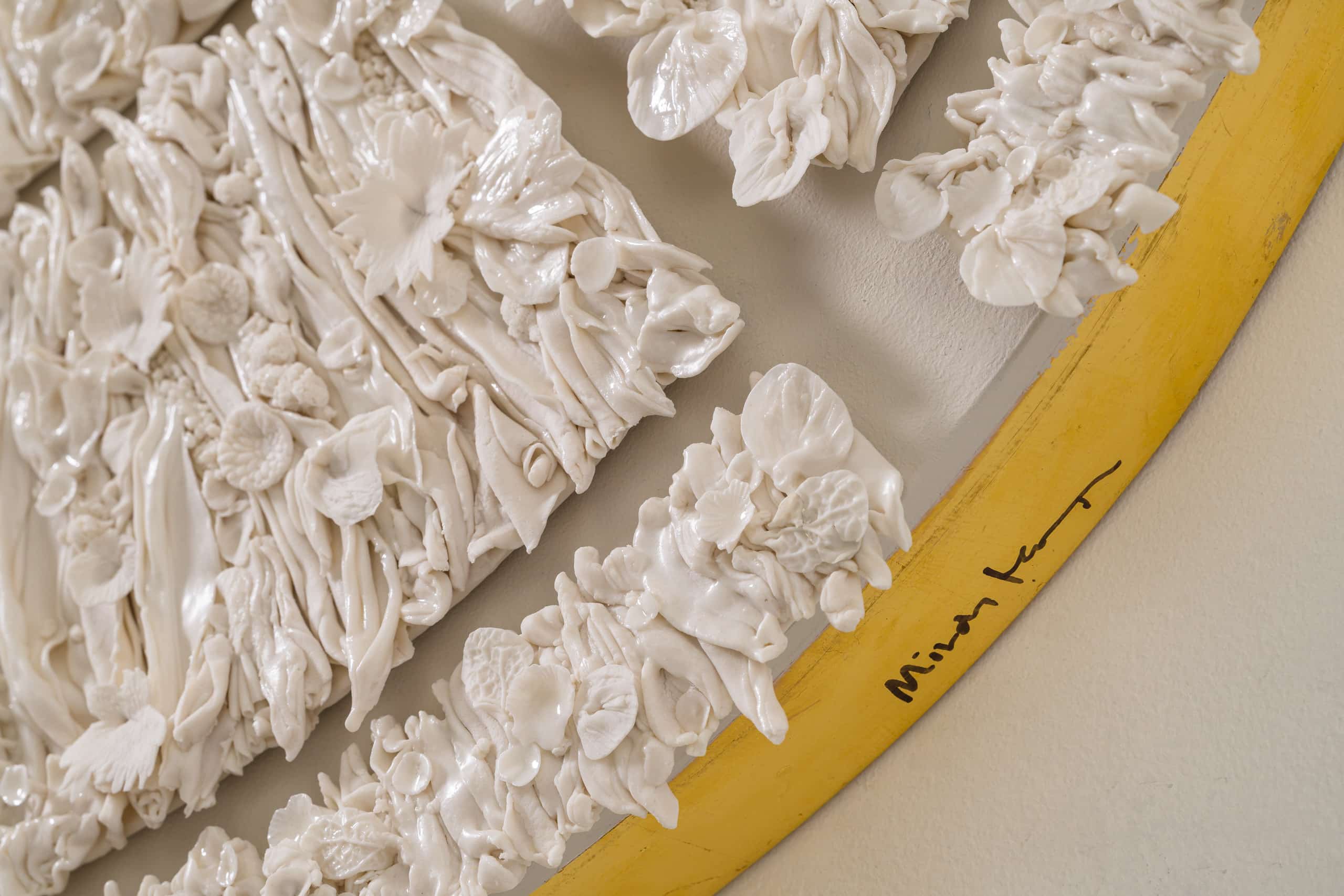

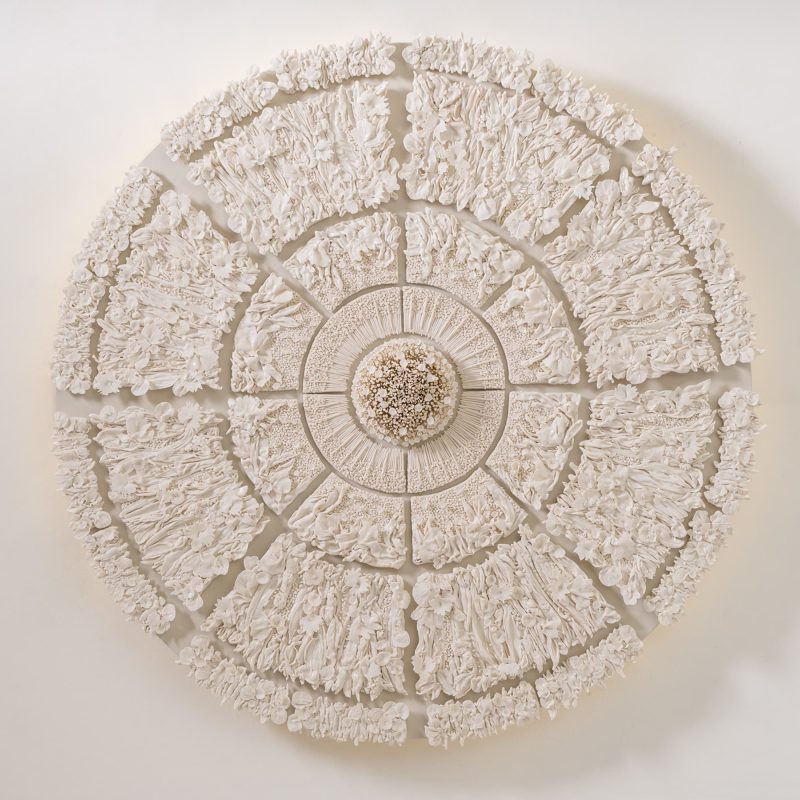

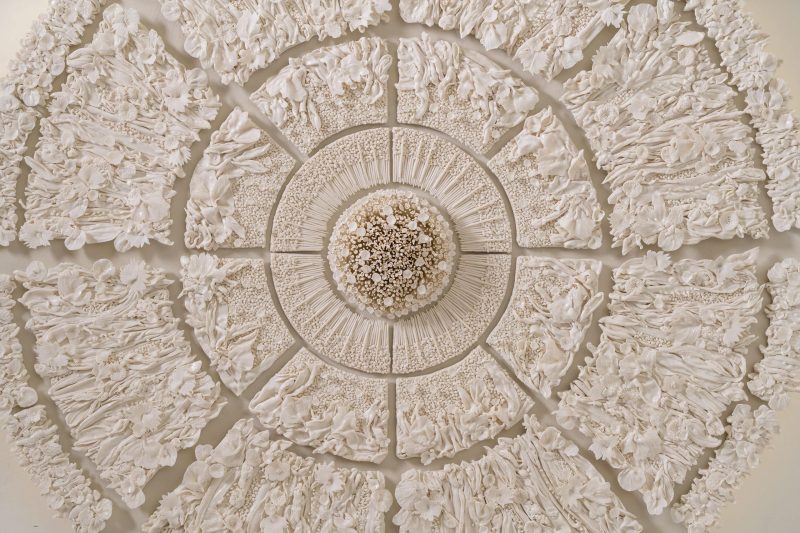

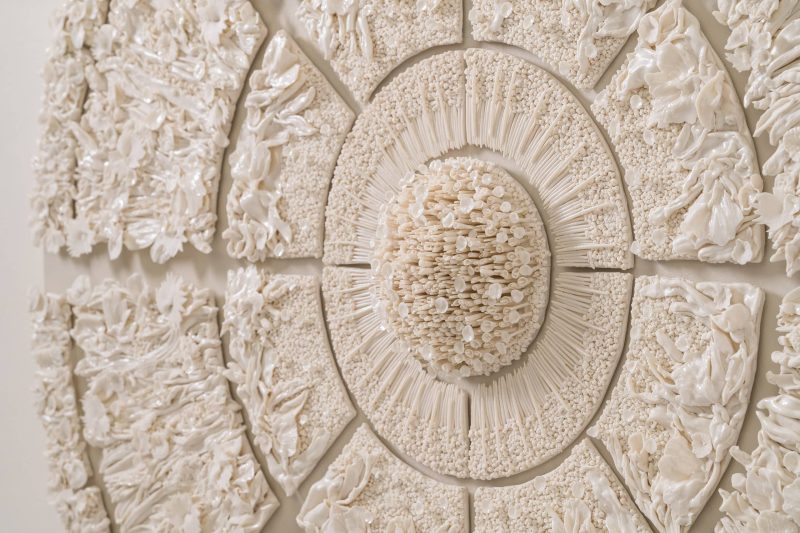

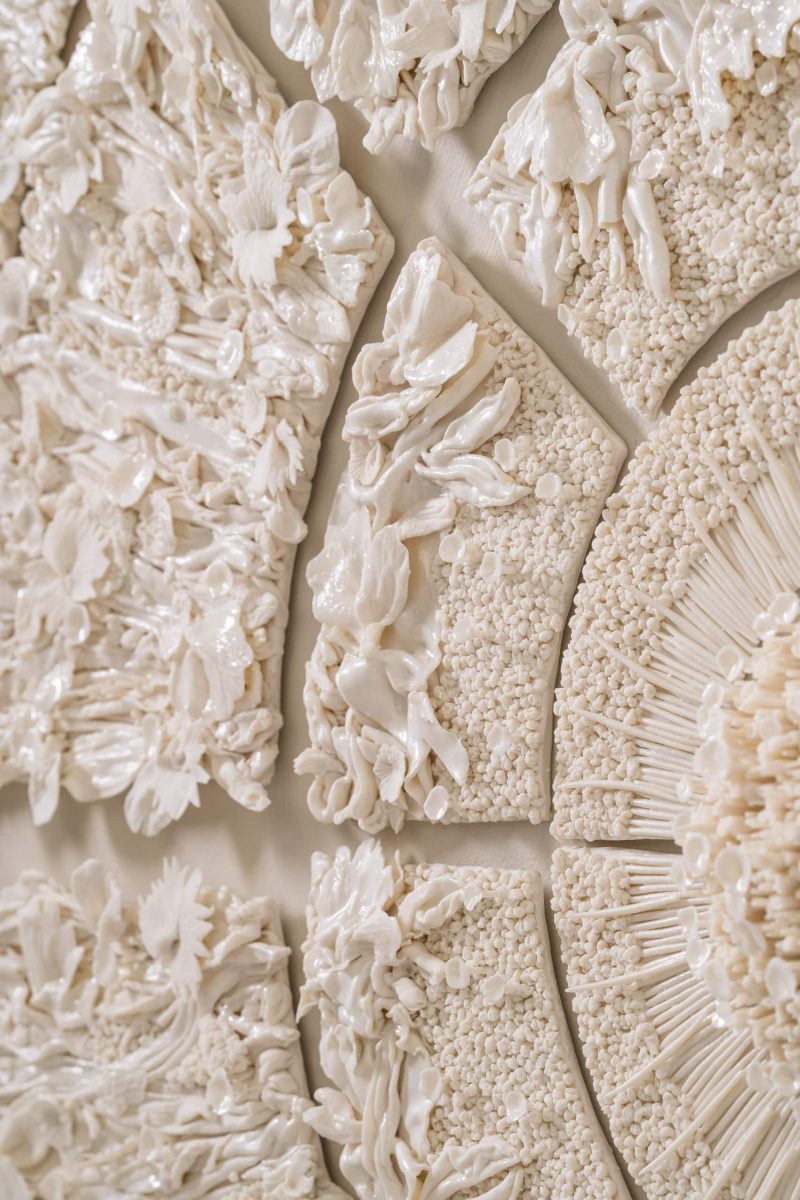
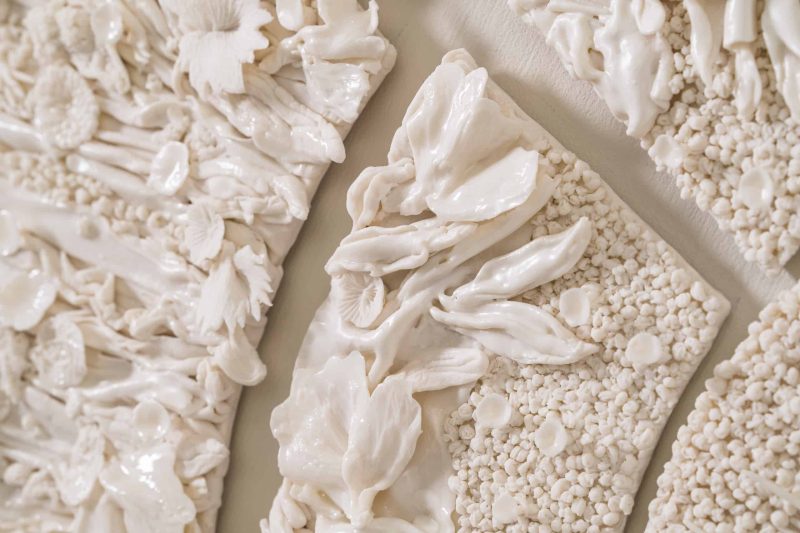
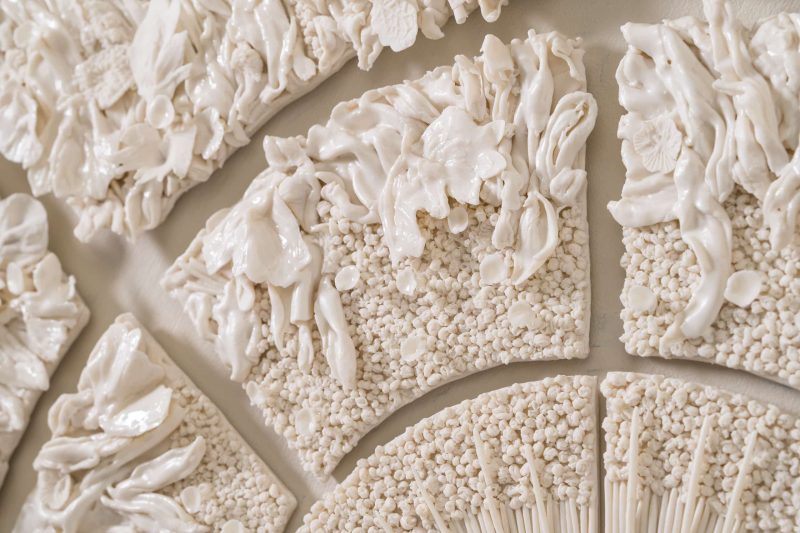
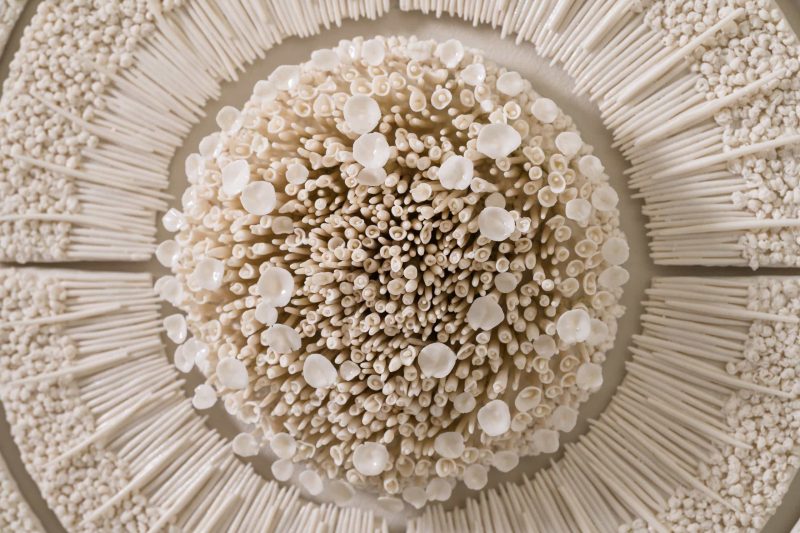
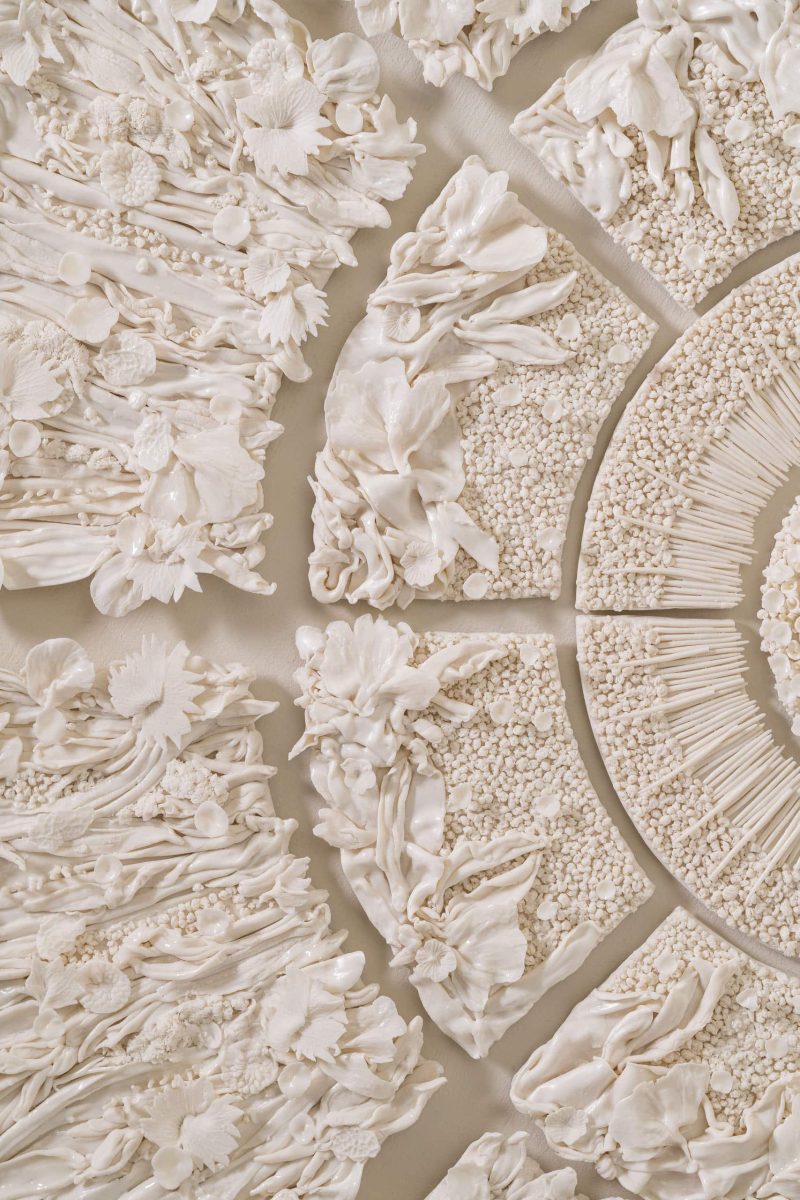


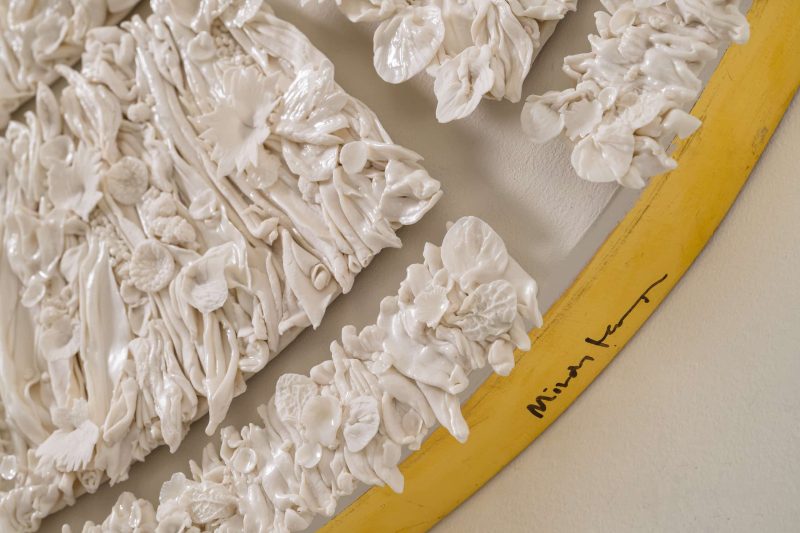
In Still Life, her largest and most ambitious wall relief to date, Mindy Horn deepens her ongoing exploration of vulnerability, endurance, and the quiet complexity of womanhood. Horn’s work has long been grounded in the idea of multiplicity; the way countless small, hand-formed components merge into a single, resonant whole. Here, that concept expands both physically and emotionally. Stretching nearly four feet across the wall, Still Life becomes less an object and more an environment. It is an immersive meditation on time, fragility, and transformation.
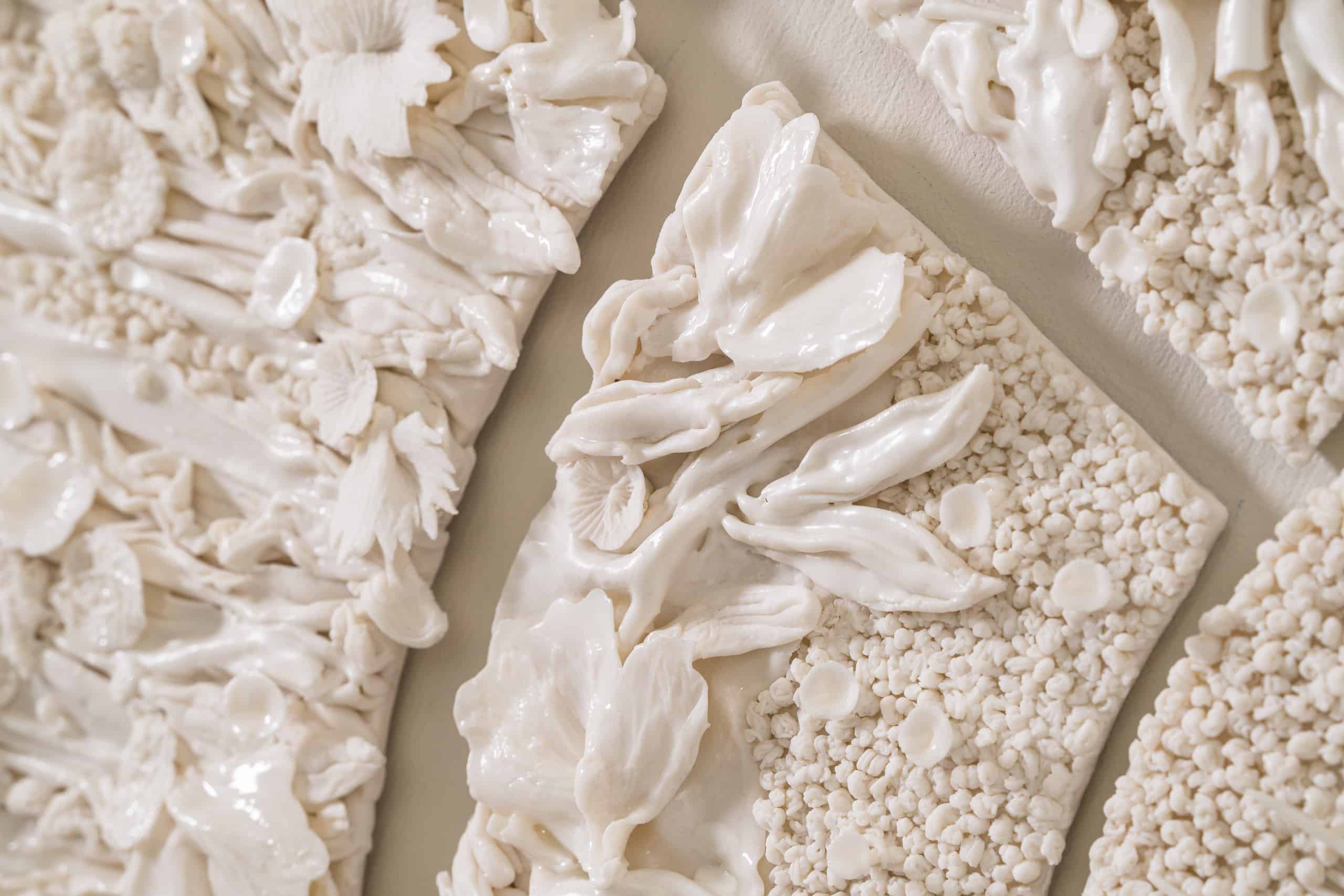
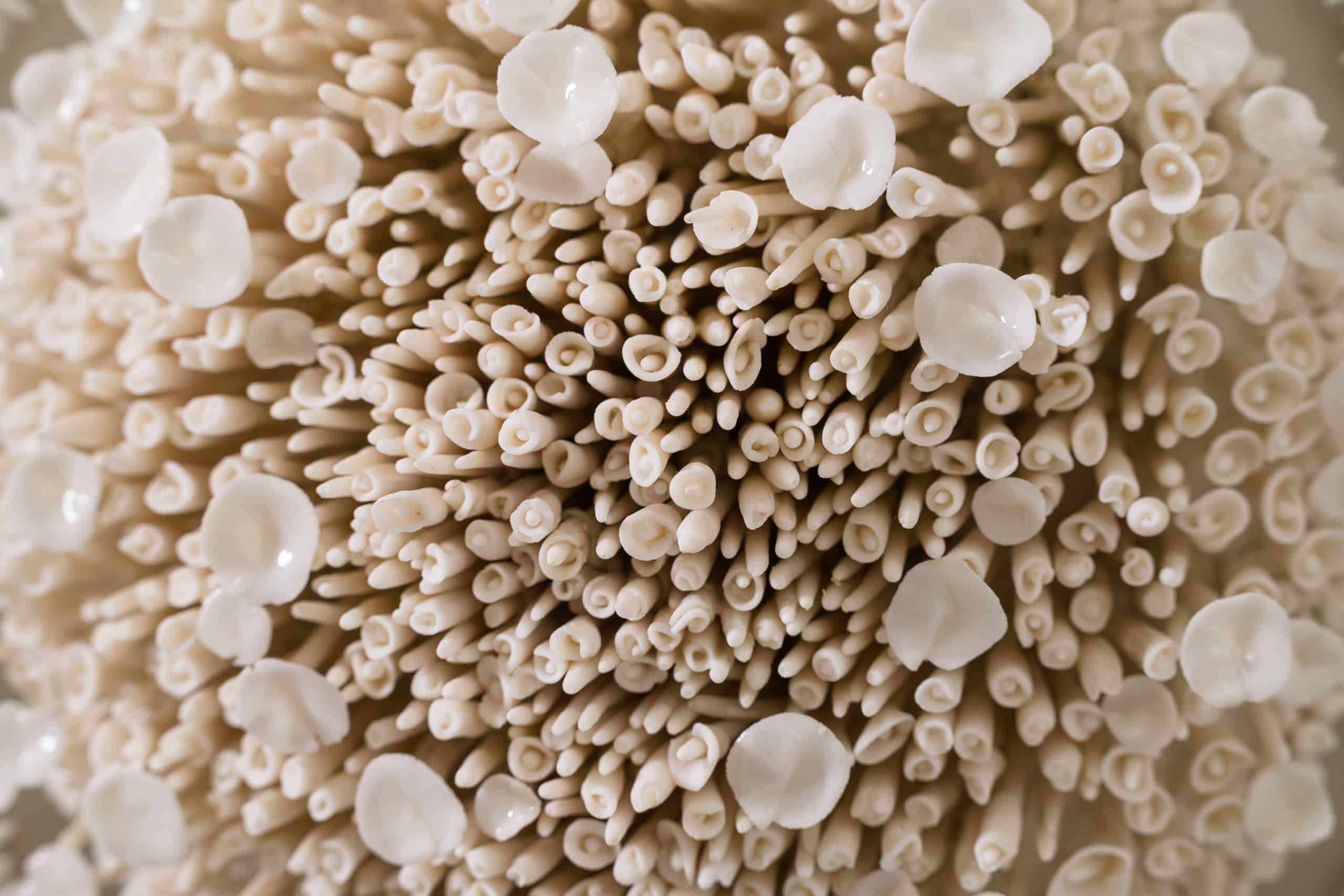
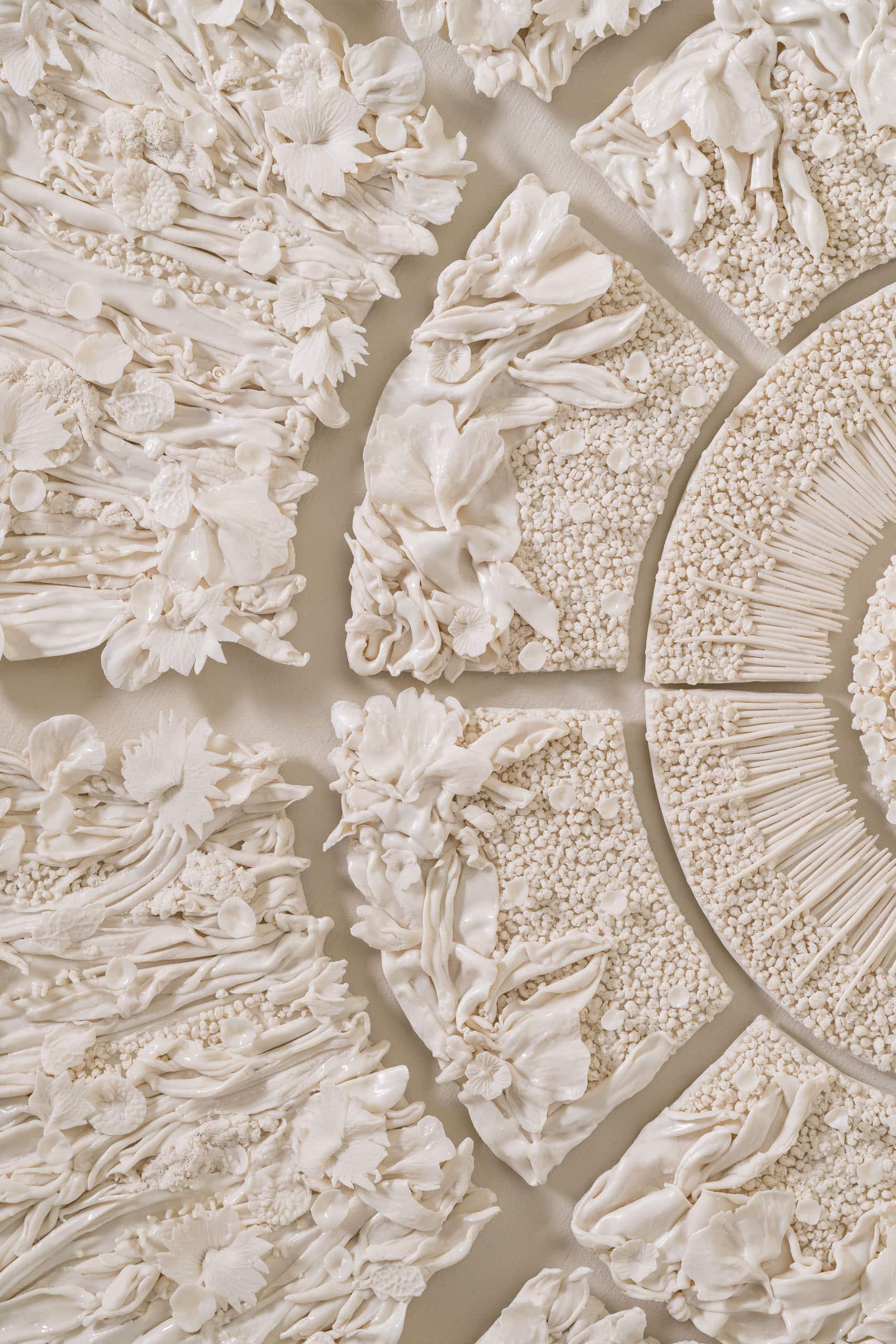
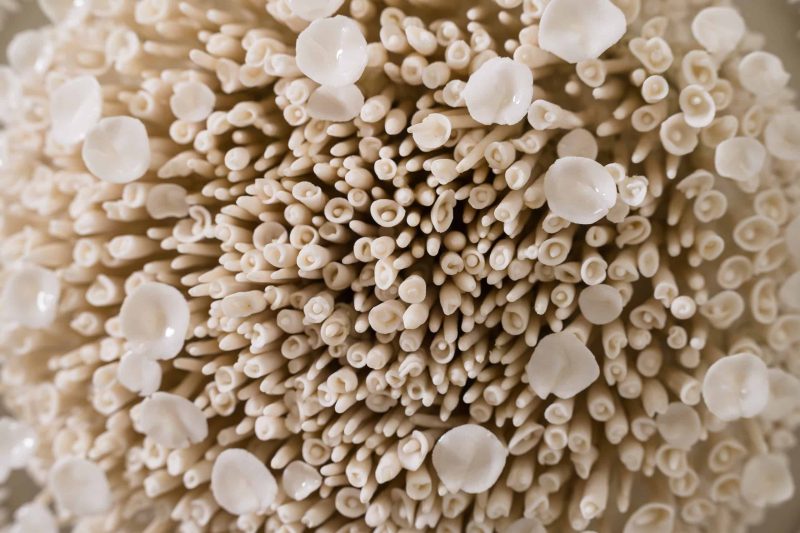
As in much of Horn’s practice, Still Life is composed of hundreds of near-identical porcelain elements including beads, thorns, petals, and cellular forms. Each are shaped by hand in a process guided by muscle memory. Though they appear uniform from afar, no two pieces are truly the same. Their subtle variations create a rhythmic tension between sameness and difference, reflecting the imperfect repetition that defines both craft and life. The result is a surface that feels alive: vibrating, breathing, quietly shifting as the viewer moves.
Porcelain, with its dual nature of delicacy and endurance, is central to Horn’s conceptual world. Its passage through the kiln mirrors the human experience where one is exposed to challenges (heat, pressure, and uncertainty,) and emerges altered and more resilient. In Still Life, this metaphor becomes unmistakable. The work’s density and expansiveness speak to the accumulation of years, experiences, and emotional strata. Each component is a small act of persistence; together, they form a testament to survival and evolution.
Themes of femininity and aging are long central to Horn’s oeuvre. The relief’s undulating forms evoke both floral and bodily topographies, hinting at cycles of blooming, withering, and renewal. While the composition suggests stillness, it is a stillness filled with motion: a life lived, a body held, a memory suspended. Horn’s title, Still Life, thus becomes a layered play on words; quietness, persistence, and the beauty found in the unresolved.
As with all of her work, Horn’s intention is not perfection but resonance. She welcomes irregularities, asymmetry, and the unpredictable movements of the kiln, allowing the material to speak its own truth. The piece embraces its own making: the traces of the artist’s hand, the evidence of repetition, the subtle shifts that define each element.
Still Life stands as a culmination of Horn’s ongoing inquiry into identity, endurance, and the power of the collective. It is a reminder that the whole is always greater than the sum of its parts—and that within every repetition lies nuance, difference, and the possibility of transformation.
Video is not available for this item.