

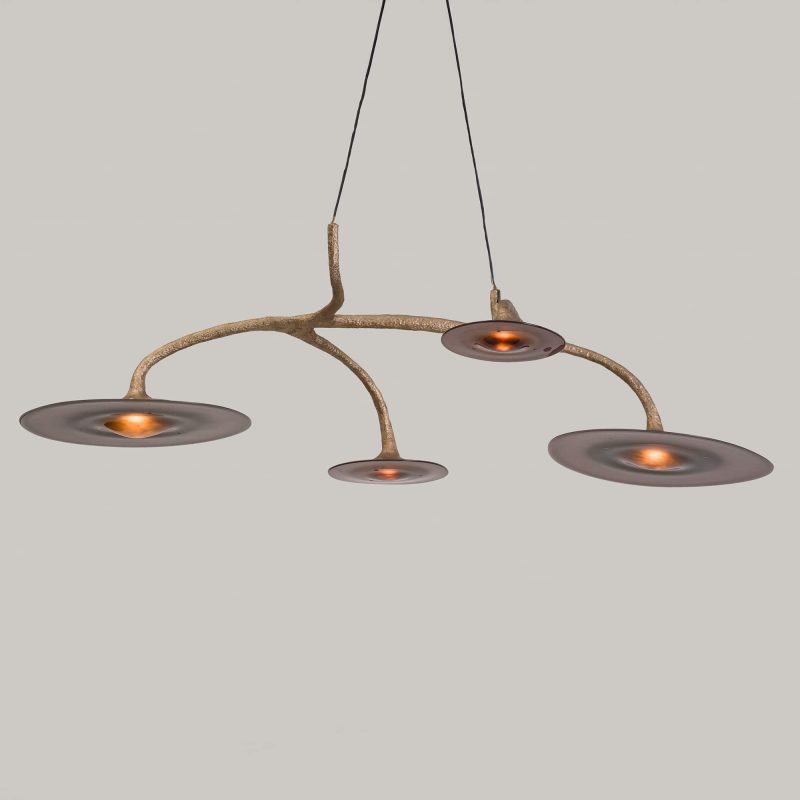


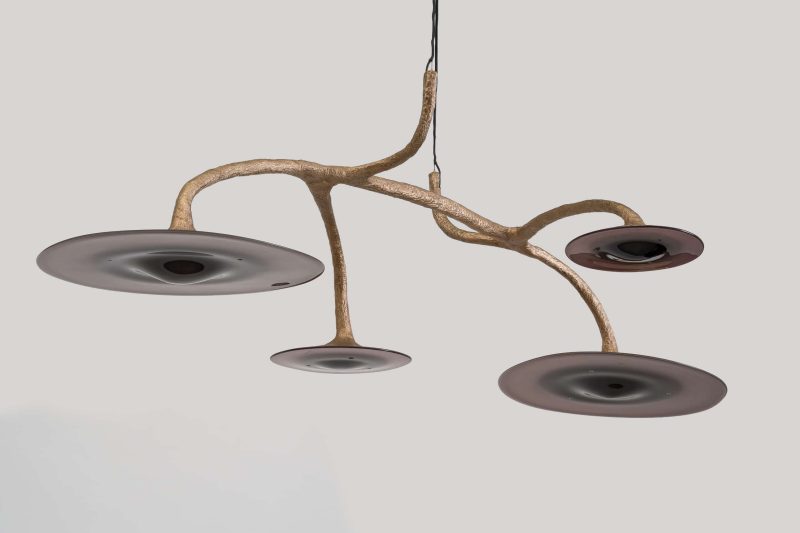
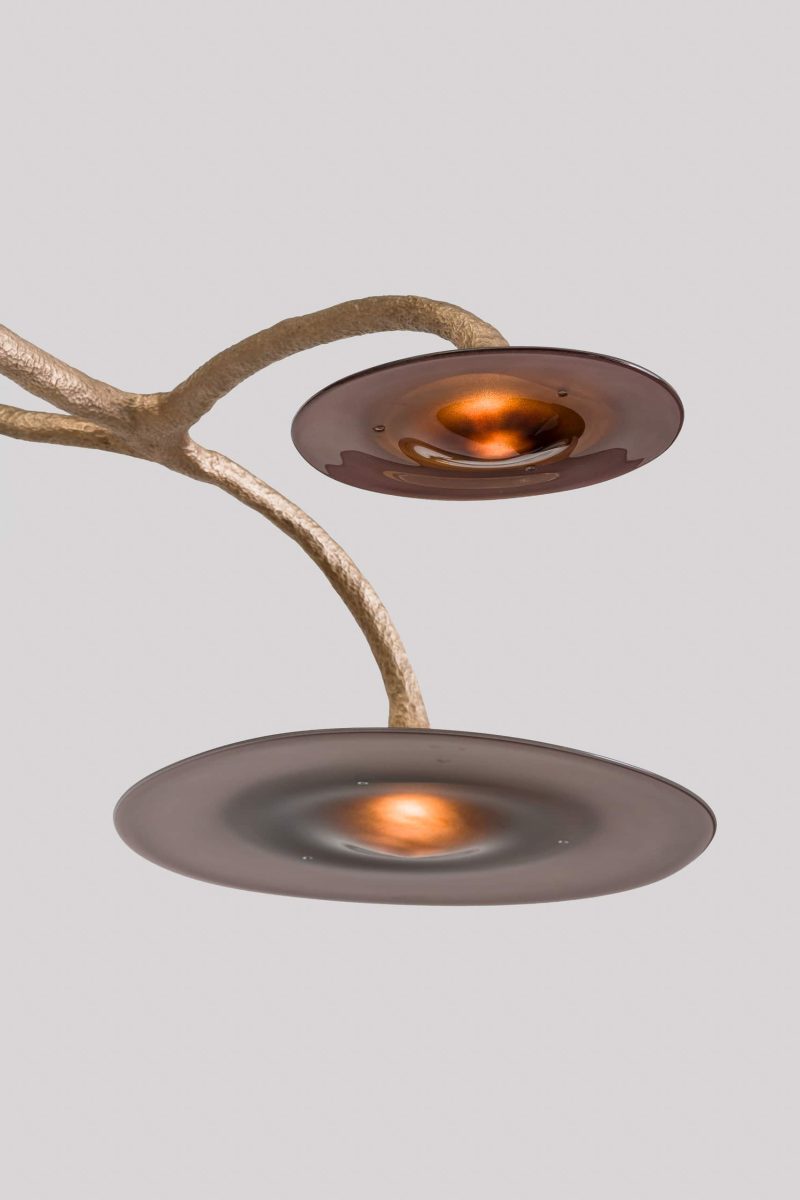

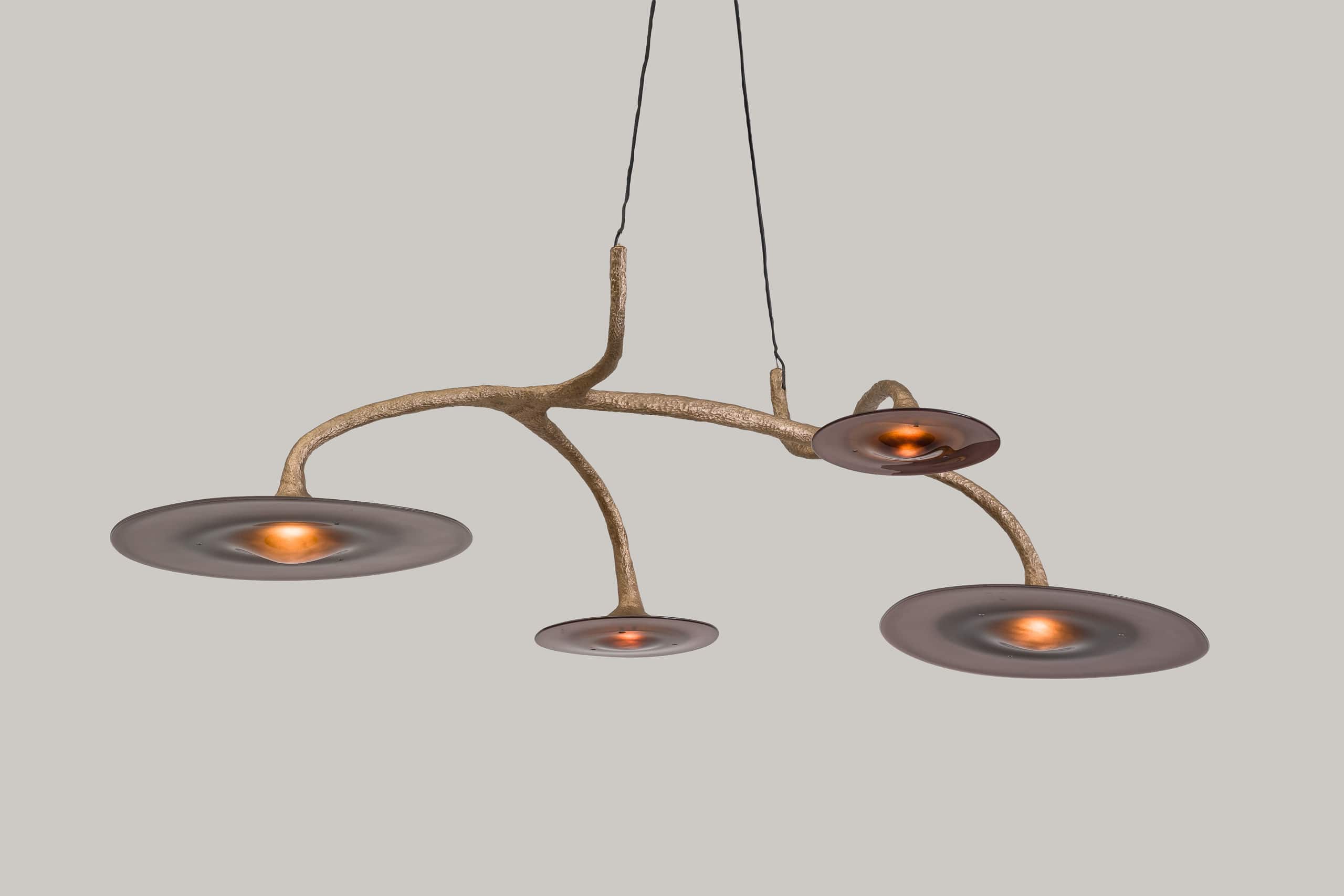
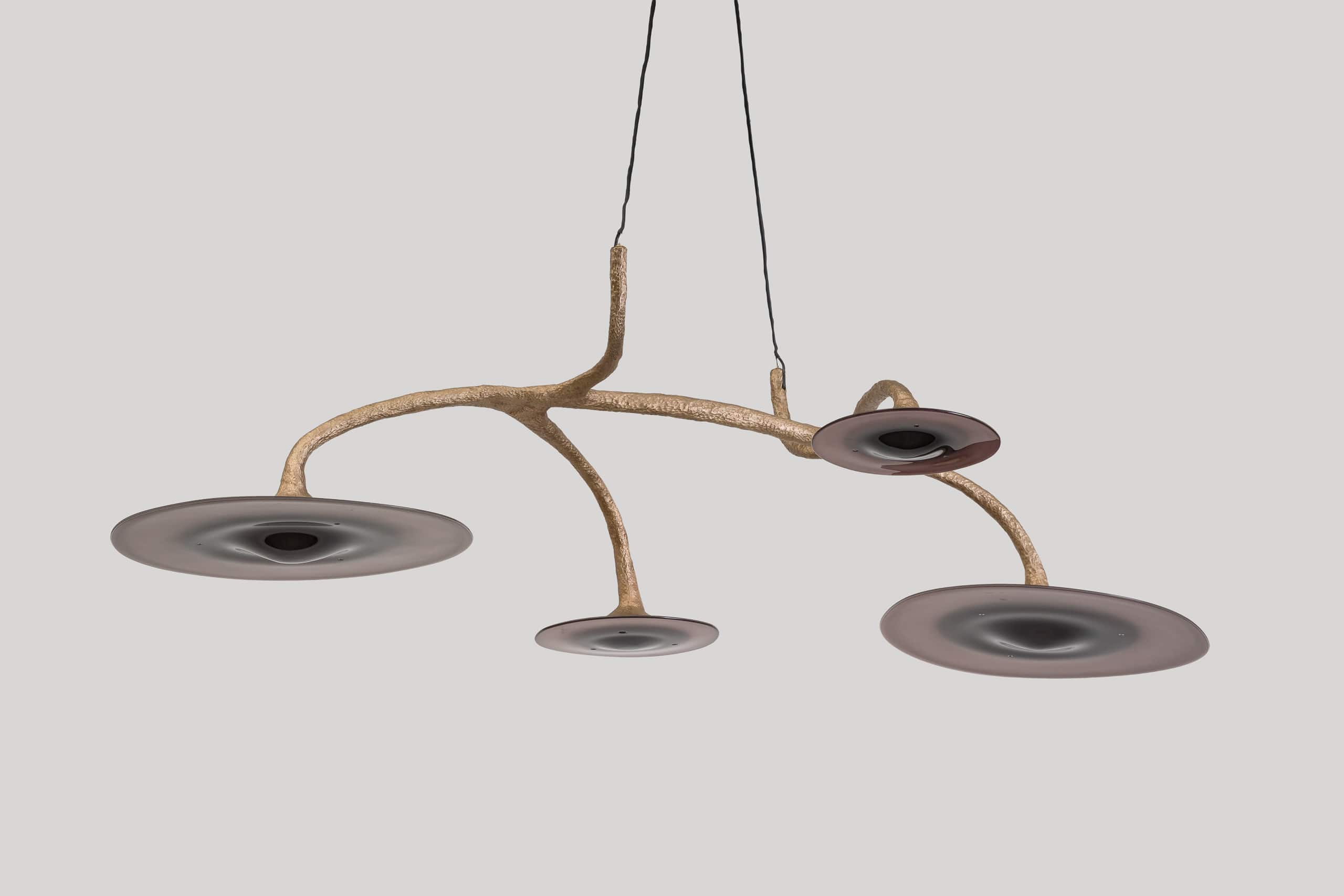

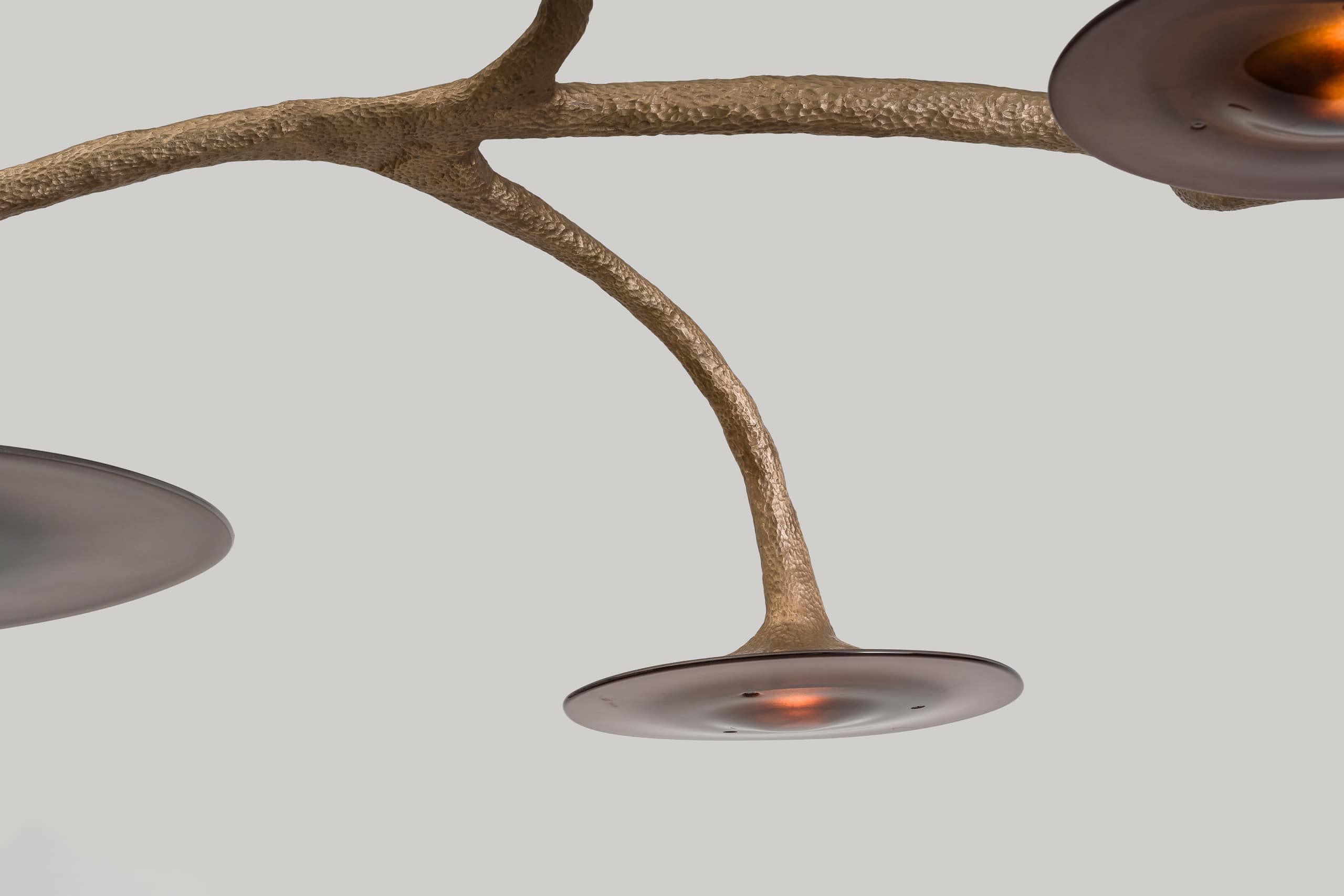
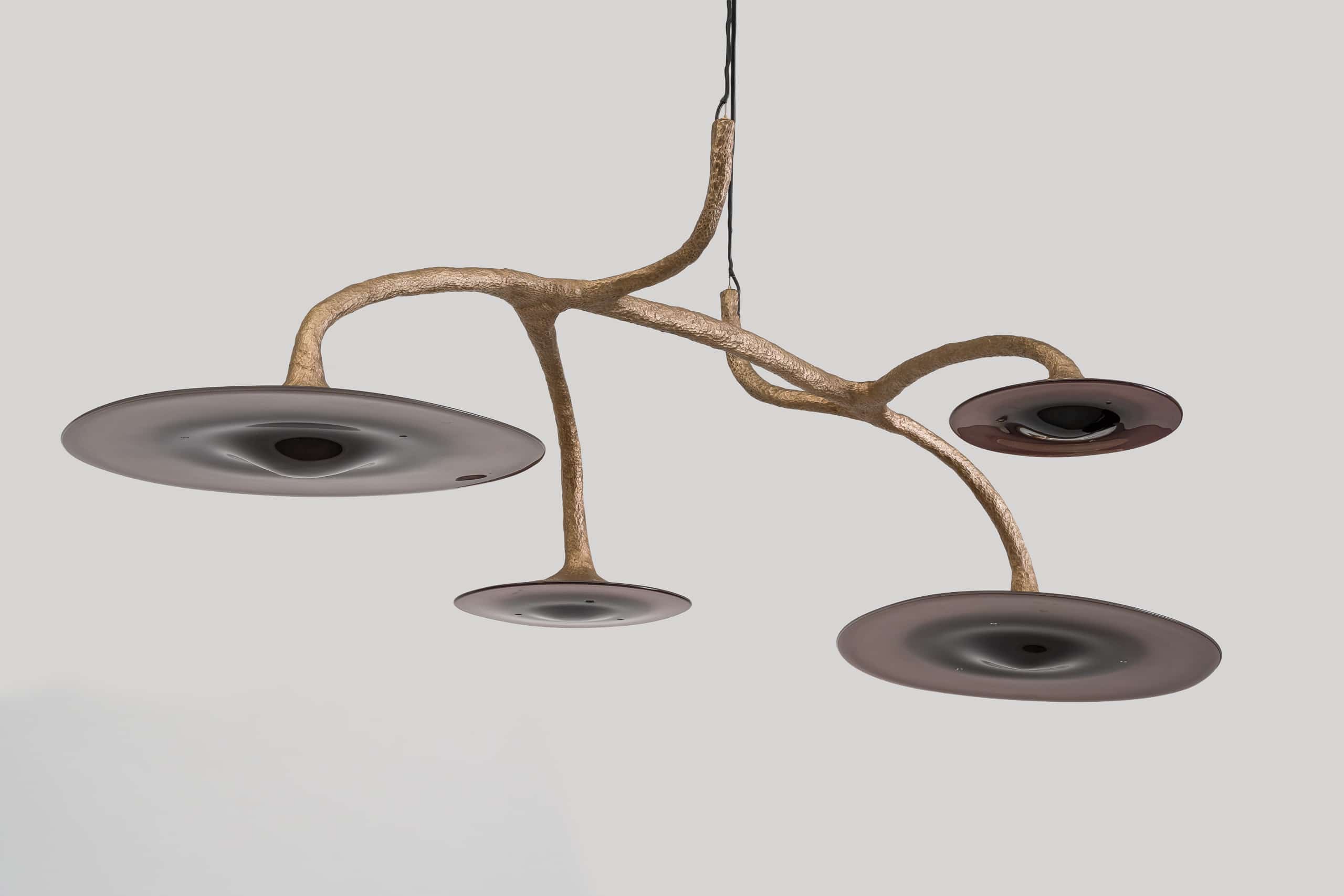

The Lilas light sculpture brings together two ancient arts of fire: glass and metal. A textured bronze armature supports a constellation of handblown violet ombré glass discs, creating a sculptural light whose presence extends beyond illumination into the realm of atmosphere and sensory experience.
The work emerges from Clément Thevenot’s Archipel project, an imagined island where thought and hand evolve together, where the distinction between art, craft, and design dissolves, and where imperfection is transformed into a defining quality. Within this fictional landscape, tools and materials are shared freely, human intervention remains essential, and the processes of making become as significant as the resulting object.
The Lilas light sculpture embodies this philosophy through the dialogue between its bronze structure and luminous glass elements. The textured metal armature carries the evidence of the hand, while the individually handblown glass discs introduce variation, translucency, and color. Their violet-to-clear ombré surfaces seem almost organic, evoking botanical forms or precious fruits suspended in space.
For Thevenot, the chandelier is not simply an object of function. Its purpose is psychic and sensory—to alter the atmosphere around it and encourage a more intuitive relationship between object and space. Glass and metal appear to exist in a state of symbiosis, neither subordinated to the other, but growing together within a fantastical material ecosystem.
In this way, the Lilas light sculpture reflects Thevenot’s broader desire to move beyond rationality and standardization. It is an object that occupies the space between sculpture and design, craftsmanship and experimentation, the familiar and the fantastical.
360 View is not available for this item.
Video is not available for this item.